Six On Saturday: Keeping Me Grounded

There were several lowlights during the week. My phone went on the blink and several heavy frosts finally arrived, followed immediately by Storm Goretti. On a positive note I finished my regular 5k Wexford Parkrun under thirty minutes. The last time I recorded that milestone was way back in 2014. Perhaps I’ll treat myself? A new phone, did I hear you say? 🤔

The garden is my mindful place throughout the ups and down of life. It reminds me to accept what comes and not to be swayed unduly by problems on the one hand and ego celebrations on the other.

I’m joining Jim at Garden Ruminations as we approach mid-January. Pop over to see what’s on display there and in many other gardeners’ gardens. Here’s my selection from SE Ireland this week, helping to keep me grounded…

Campanula
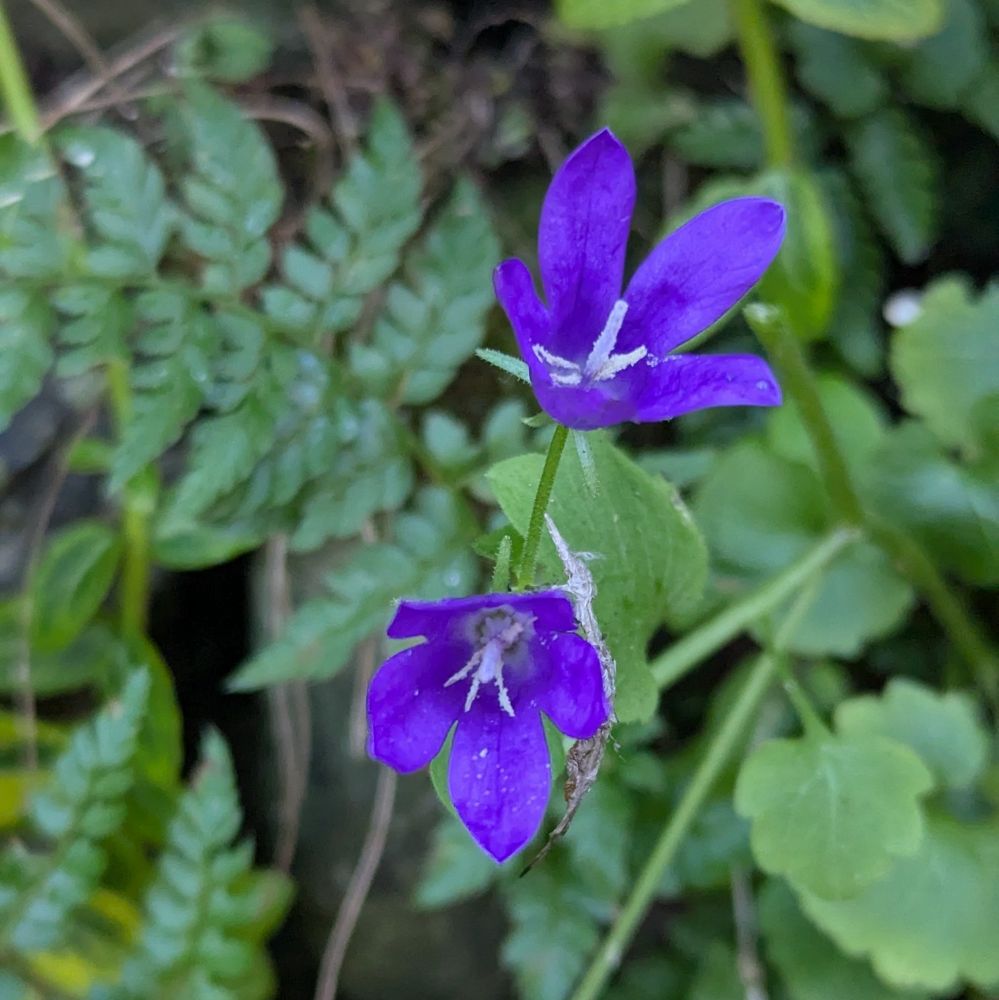
Campanula comes into flower en masse in late spring and sometimes there’s a second flush in September after a severe haircut. This tiny remnant brings joy to my heart. I vow to shine no matter the season.

Wolf Moon
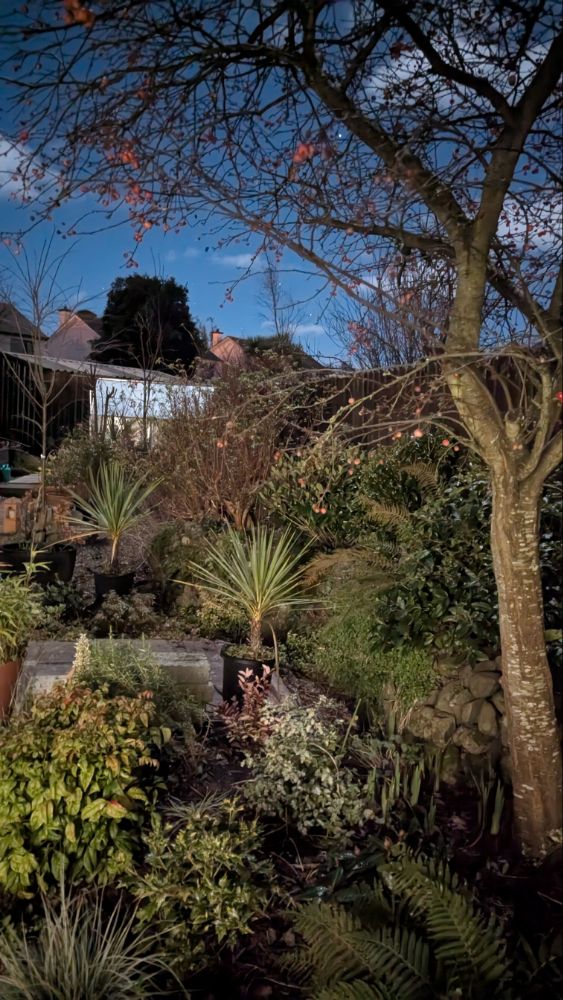
The moon is out of range. It’s moved further west, yet the night sky is lit by reflected sunlight, and the photo was snapped with night mode. Actually, I can’t take credit really because the wonky phone gently suggested night mode would be best. A nice way of saying that it would look very drab if I decided to ignore the suggestion. Imagine the possibilities with a smarter smart phone? No, perhaps not.

Rockery
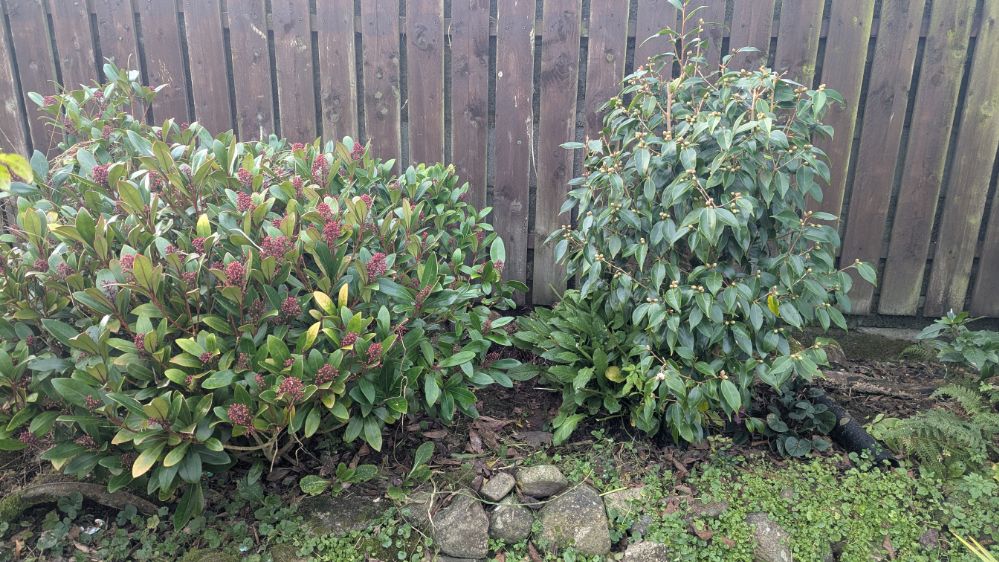
Skimmia and Camellia side by side. I spent an hour tidying this little rockery area during the week. I call it Joe’s rockery, as it’s against the boundary wall of what was Joe’s garden.  In years gone by he was great to leave baskets of grapes and other garden produce on the wall for us. I still think fondly of him.

The Tidy Side

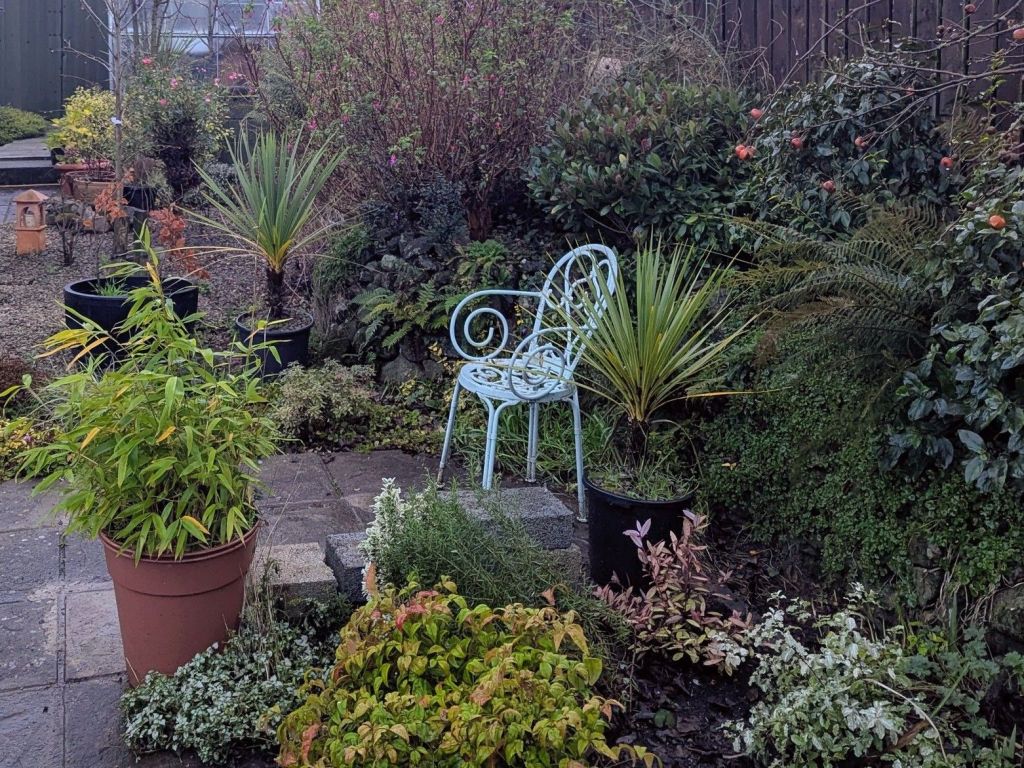
I use the quiet of winter to plot and plan what I’d like for the year ahead. This corner is gently on my mind.
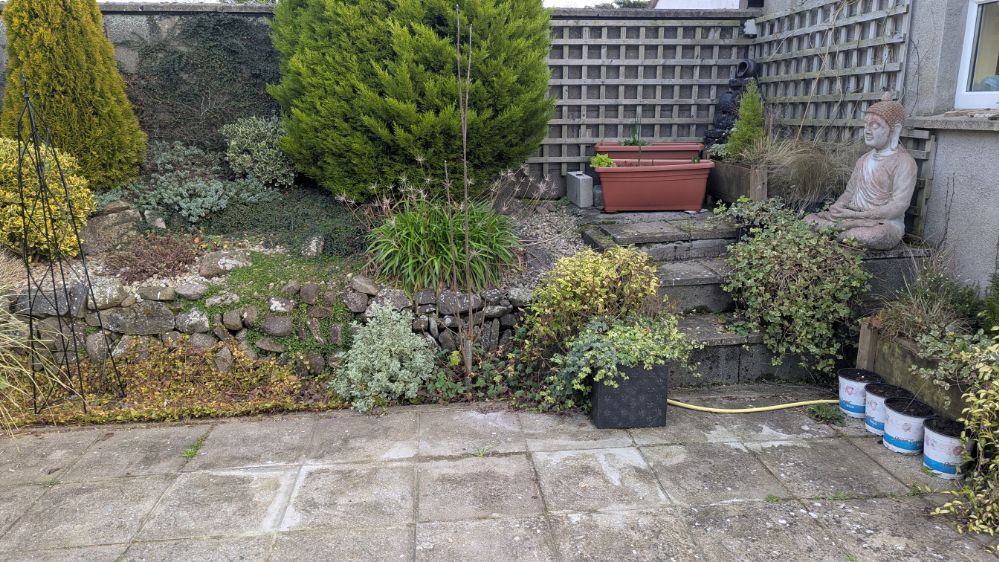
On the sunny west-facing side of the garden, the tidy-up had been mostly completed. It really didn’t need much. I’m turning over some ideas for the raised corner. There’s no rush. Something will emerge. Several years ago I had a seat there. It was a lovely vantage point to enjoy late evening summer sun.

On The Other Hand

Theres another change in the pipeline on the other side.
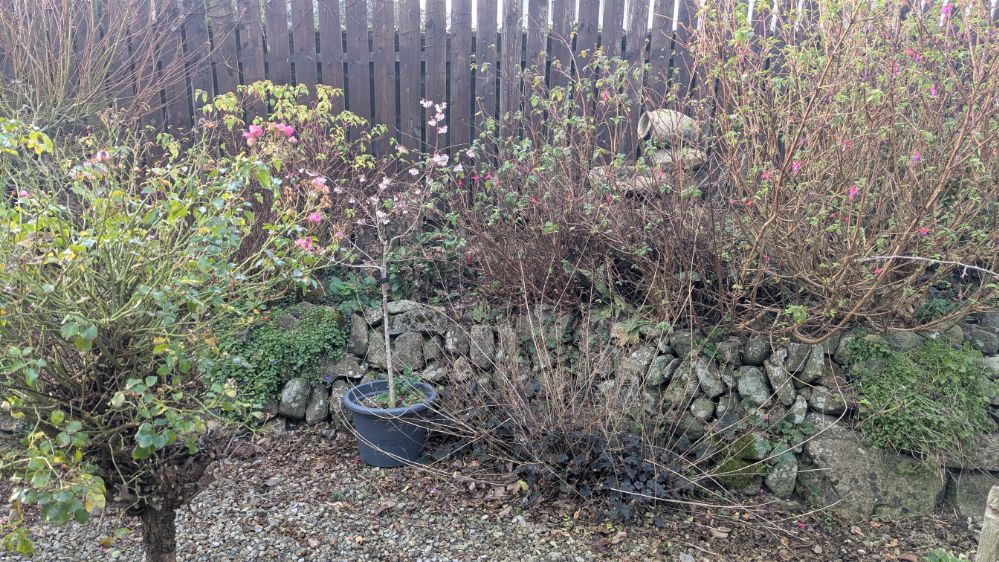
Untouched since September, this east-facing rockery is drab, but I’ll leave it as it is for another month. There are three fuchsias on top and I think two will be sacrificed.

A Dangerous Yoke
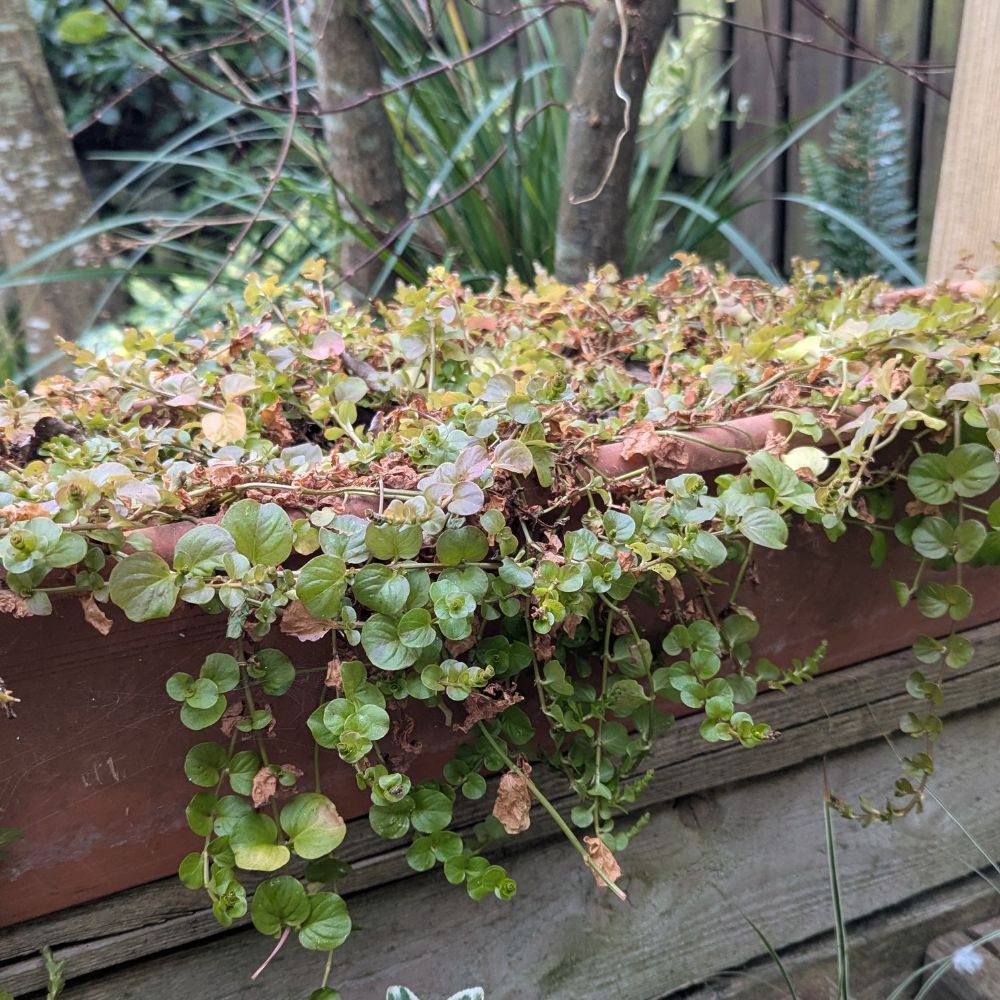
Creeping Jenny is very definitely a dangerous yoke, but I’m up to the challenge of taming her! Why? Because in summer it is a beautiful shade of green. Mostly I keep her prisoner in window boxes, to impede her urge to spread into unwanted places. Now, she does a great job hiding a bare corner. I glance with satisfaction regularly. She will not best me!


To finish, a quote from James Clear. Its not specifically related to gardening, but but it’s worth applying it there too.

There are two ways to grow: by adding or by shedding. Do you need to add something or do you need to shed something?

Over the coming months my garden will change to include adding and shedding. Me too, most likely.

I hope you have a great week.

P.
The First Six Of 2026

I’m reminded of Victor Meldrew’s refrain from One Foot In The Grave: “I don’t believe it. I just don’t believe it.”

The incessant rain stopped two weeks ago and since then it has been dry almost every day. For the first time since mid-October the garden is not saturated, so I took advantage of the good conditions to get to the garden. I spent most of New Years Eve pottering about. I can’t say that I really got much done, but it was good.

Inside, we got a lot done. The decorations came down before the New Year, a quiet ritual that signalled a return to normal routines. Join with me as I share the first Six of 2026…

Primrose

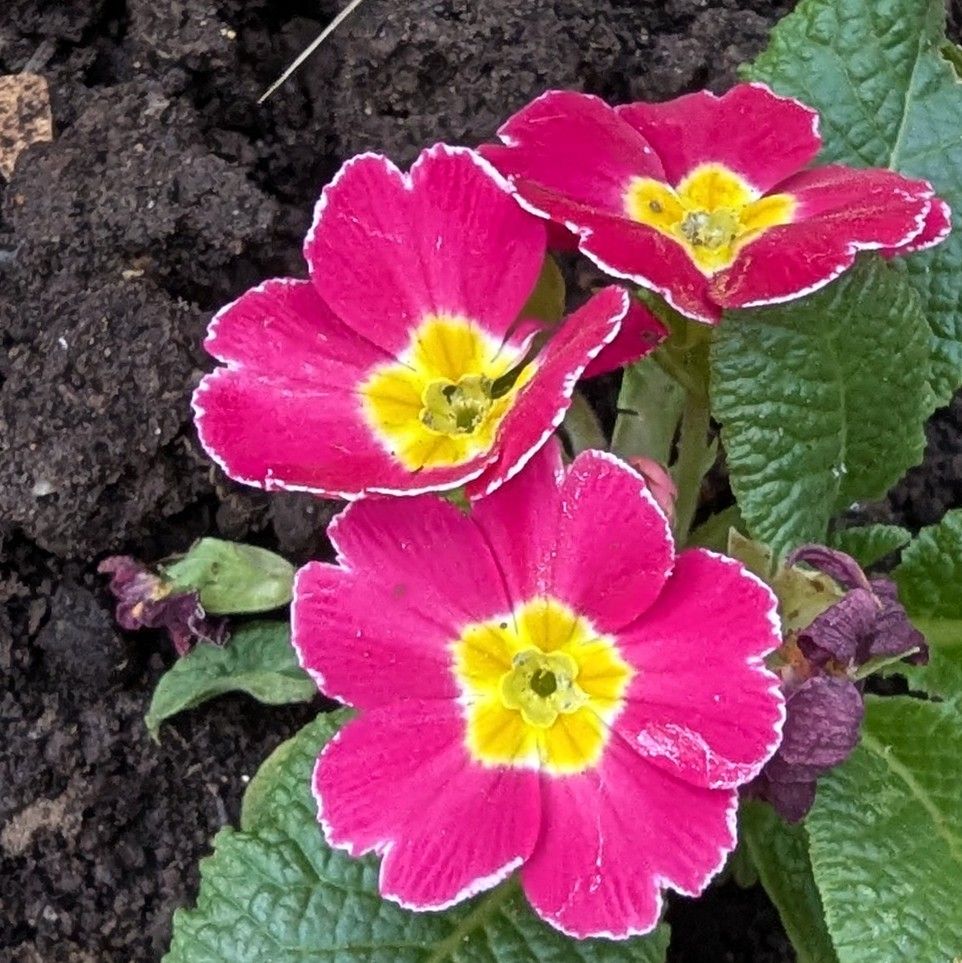
I continue to enjoy my morning coffee outside and this pretty primrose caught my eye. I’ve got several in pots but they really prefer their roots dry. High on a rockery suits them best, but this one is an exception. It is doing well.

Sedum

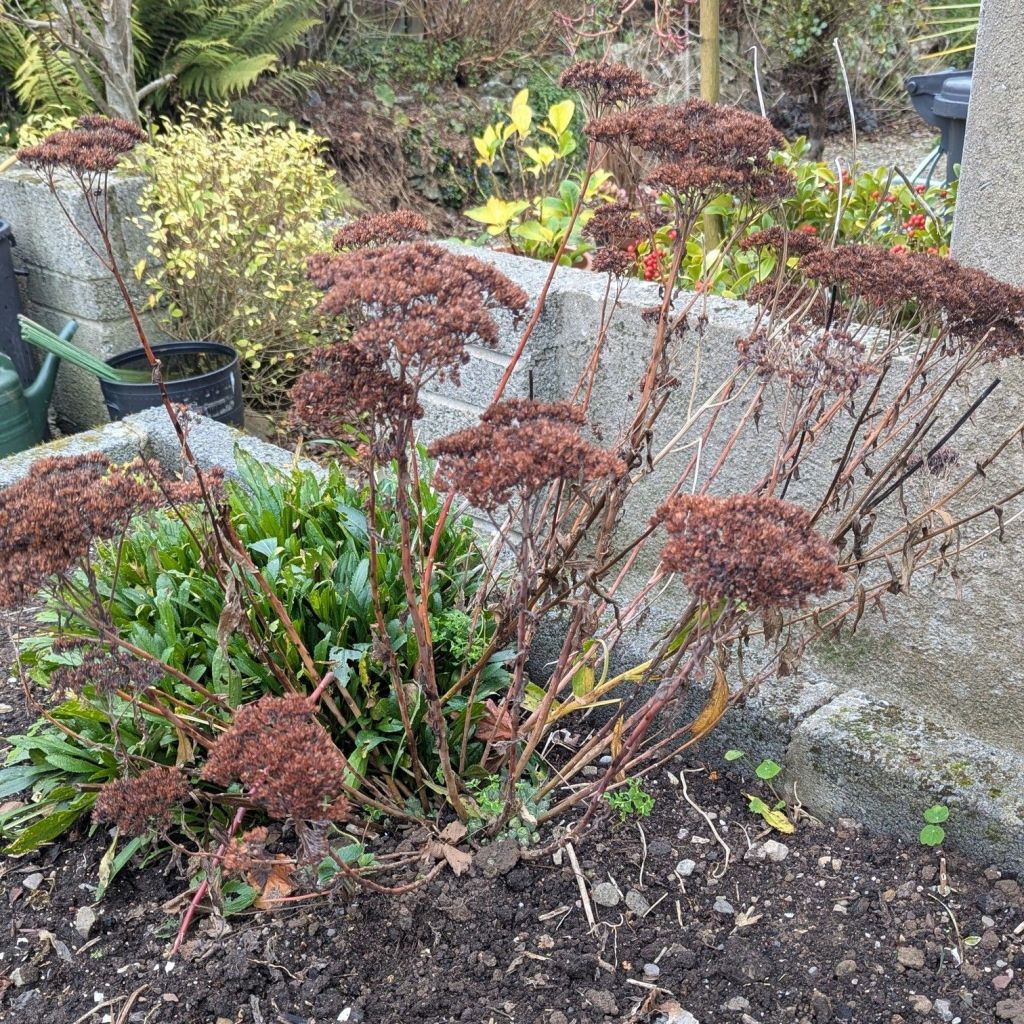
About three or four years ago, Geraldine gave me two sedum plants and they’ve matured well since then. I’ve had them on the raised beds near the glasshouse. Apart from lovely flower heads in summer, they look good even when the flower is finished.

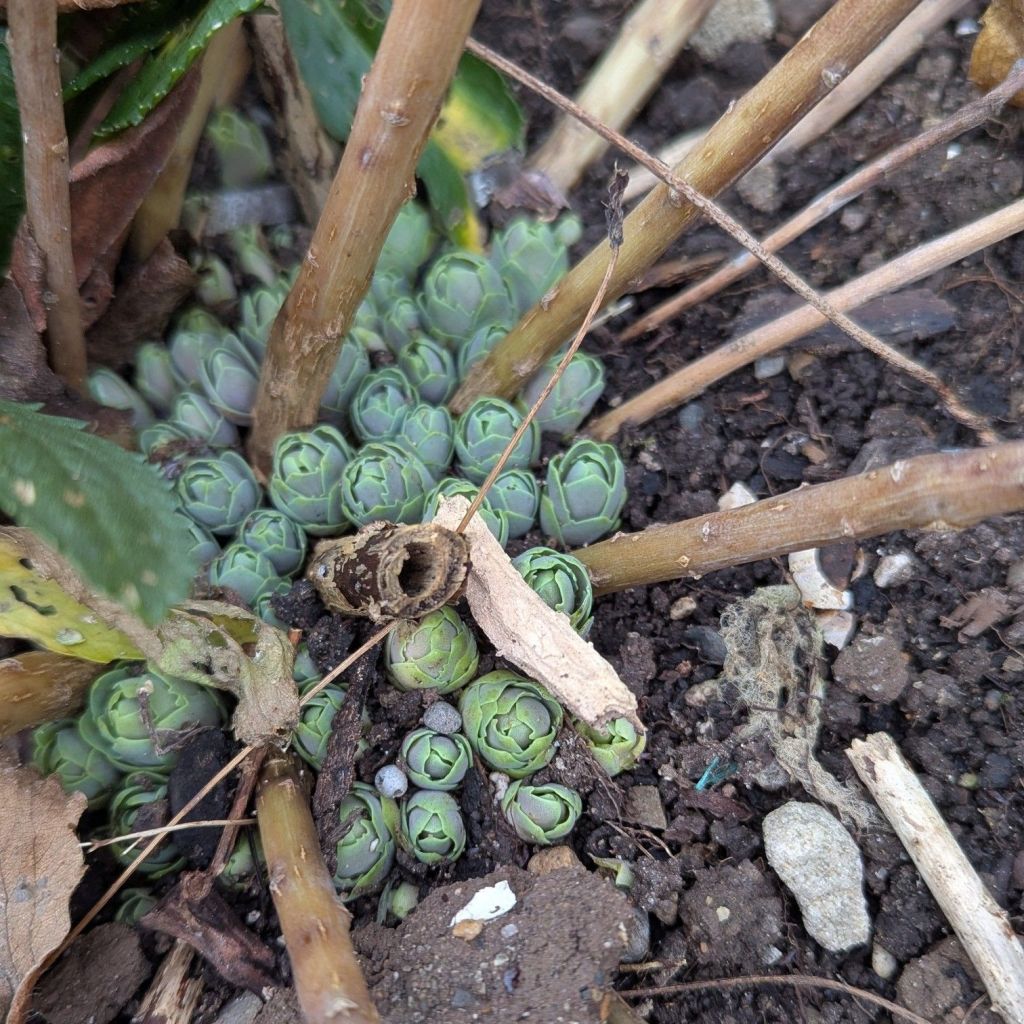
Already I can see the beginnings of next summer’s flowers and therefore very soon, I’ll cut the old stems to ground level. Apparently, it’s best to leave the old flower in place. Last year I waited until March, but I may not have the patience to wait that long.

It is a remarkable plant, loved by bees and butterflies. Easy to care for with a very long seasonal interest. Writing about it now, it seems to make sense to get another one. A different variety perhaps? I’m also going to move this one closer to the house and in doing so I’ll divide it to make two decent clumps.

Annual Lobelia

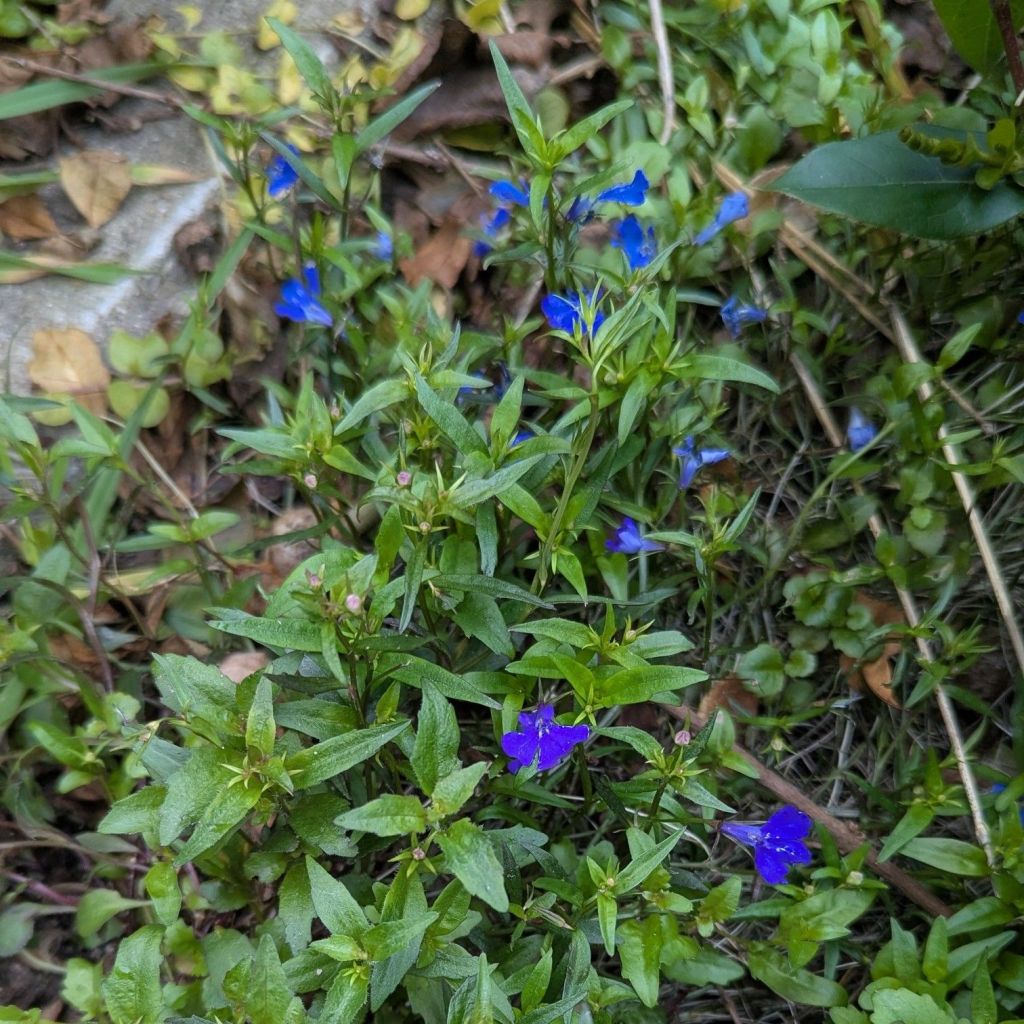
No hard frost yet so this is still going. To have it still in flower in January is an unexpected bonus. Perhaps not strong, but definitely alive. Lobelia ‘Crystal Palace’ has earned its keep. There was a time when I’d be thinking of starting the 2026 lobelias from seed, but not any longer. I’ll buy a dozen or two in June.

Once planted, it quietly gets on with the job. And somehow, despite everything, it usually ends up being one of the best things on display. It’s on the summer of 2026 list already.

Hyacinth

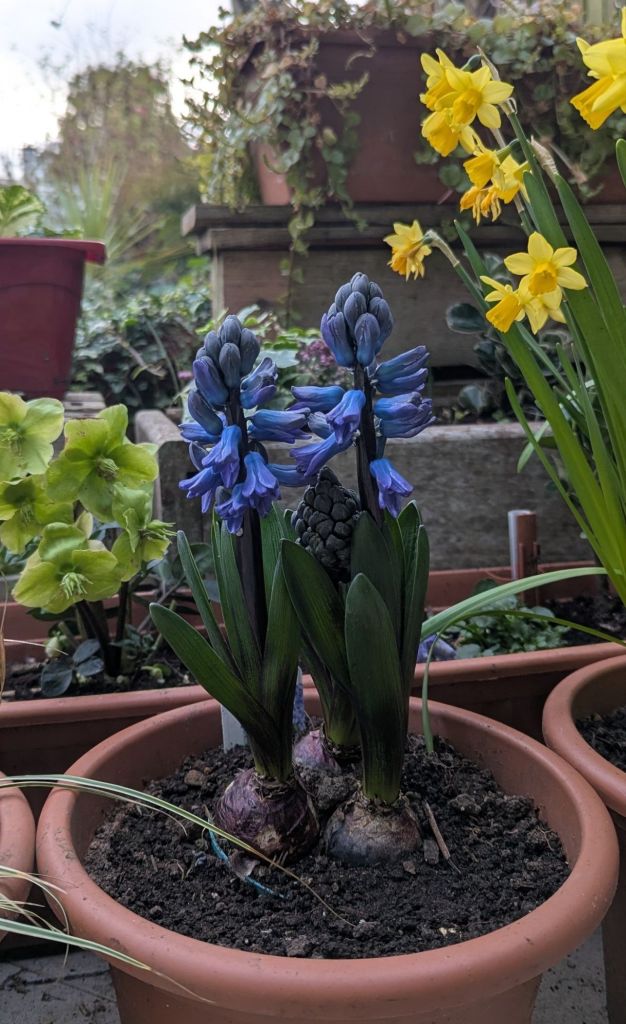
In addition  to recent daffodils added to the covered pergola area, I also got myself this hyacinth. At the time the shoots were merely peeping from the bulb. Now it’s their time. It’s a nice way to say Happy New Year.

Double Delight

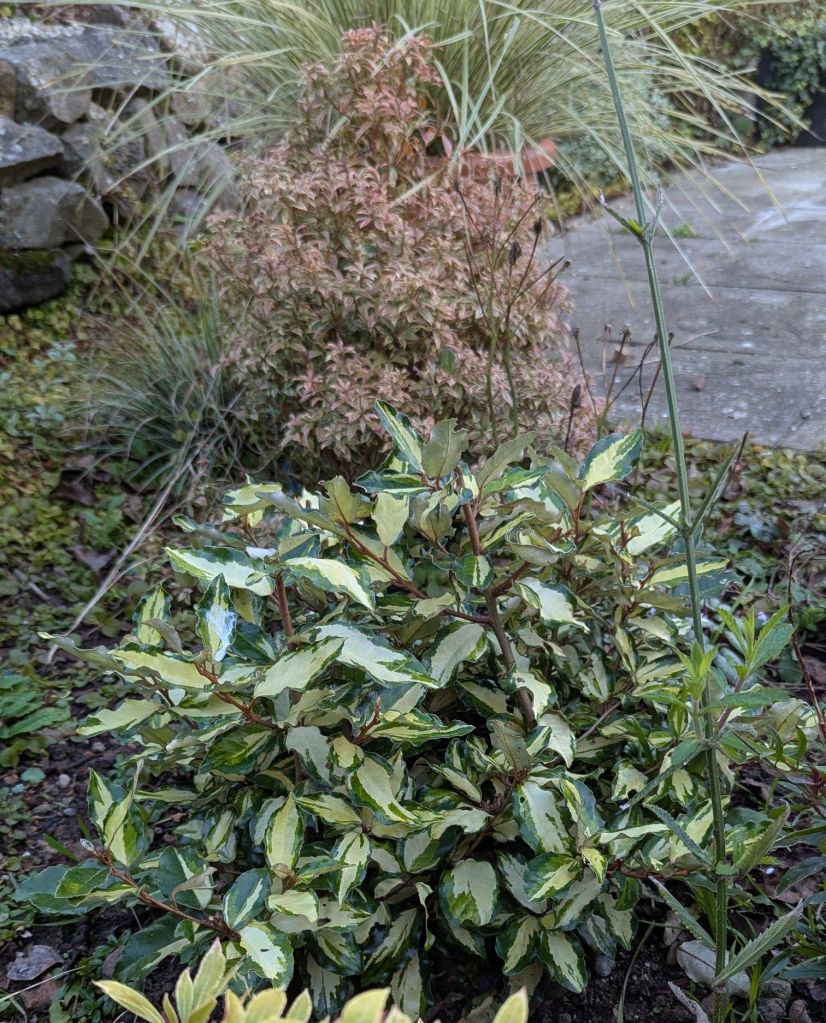
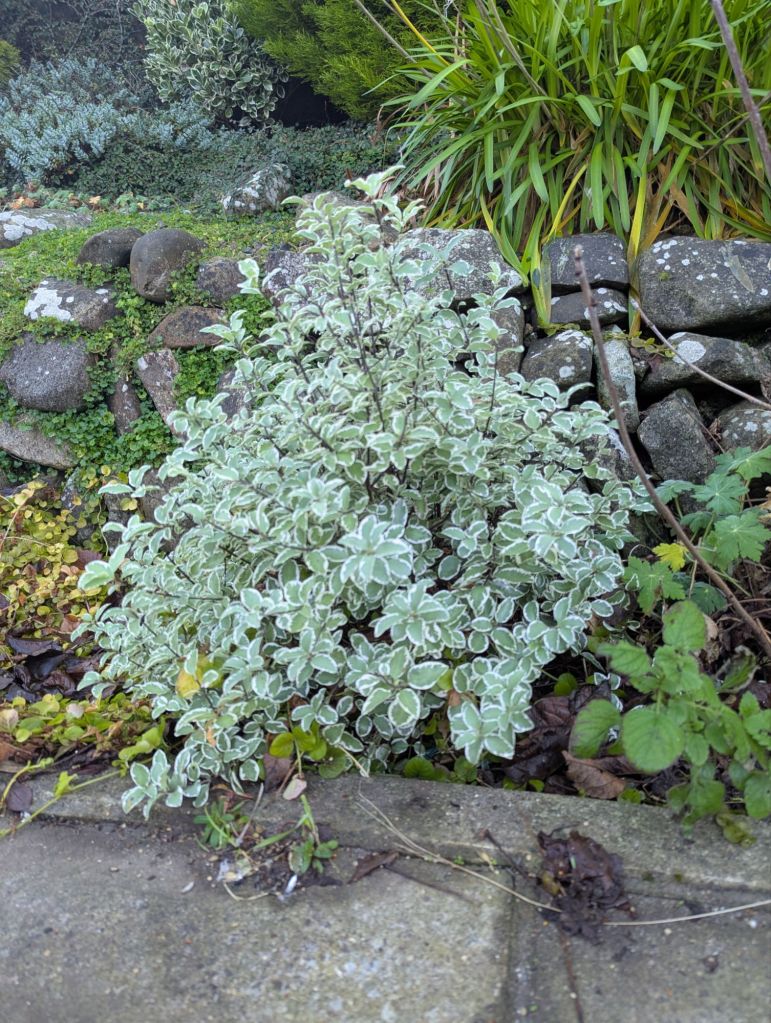
Two for the price of one in this photo. I think it’s Eleagnus in the foreground and Pieris japonica ‘Little Frosty’ behind.

I do leave the labels attached to plants but after a few years they disintegrate. Likely there’s a better way. The Pieris label is there but not the other one. As with my mystery plant last week (Pseudowintera), any confirmation or otherwise will be much appreciated.

Water

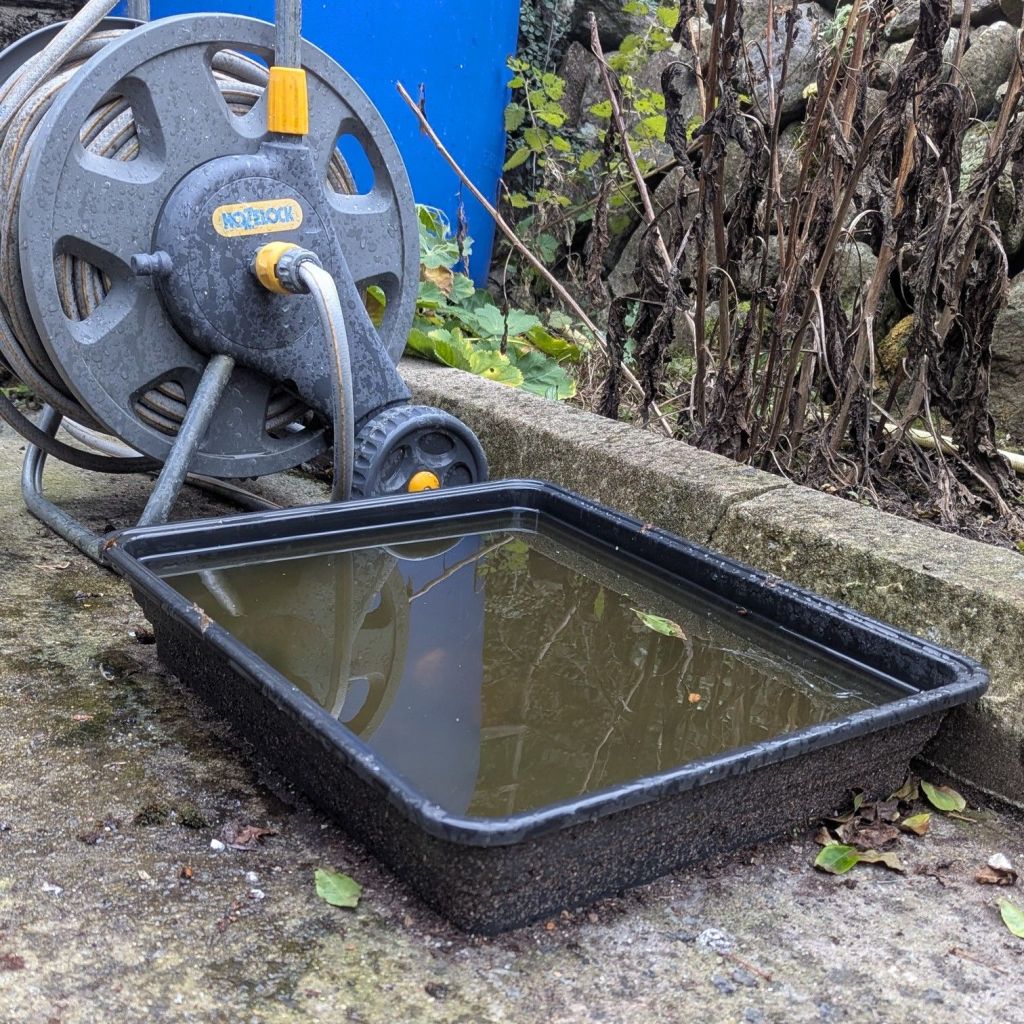
Continuing my winter care for garden birds, here’s the bathing area. They love it, in particular the starlings and blackbirds. The basic necessities: food and water. We have not yet had a hard frost but when it does arrive I’ll make sure they have good access to water for drinking and washing.

Thanks to Jim over at Garden Ruminations and Happy New Year to all.

P.
Six On Saturday: Christmas 2025

Short and very sharp this week. I’ve been busy with Christmas festivities, but I did find another five plus one for today’s round of Six On Saturday. Most of this week’s selection is about evergreen garden structure, which becomes very important in winter. Without further ado, here we go …


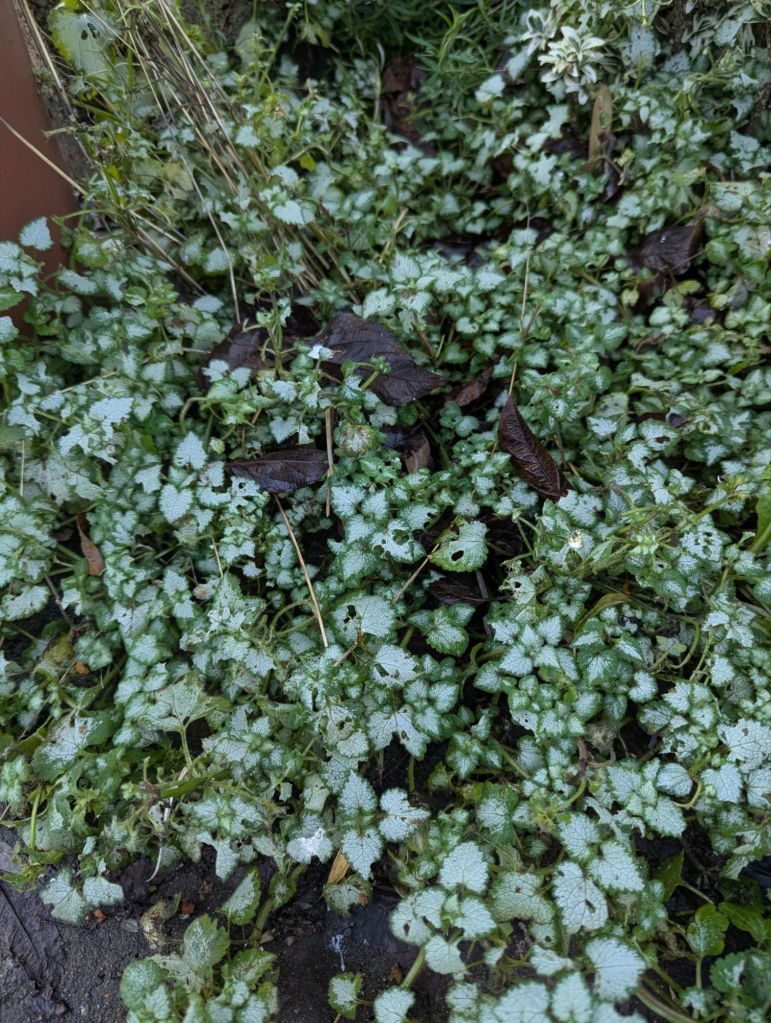
1. Lamium maculatum

Commonly called spotted dead-nettle, and very much alive, despite the name.

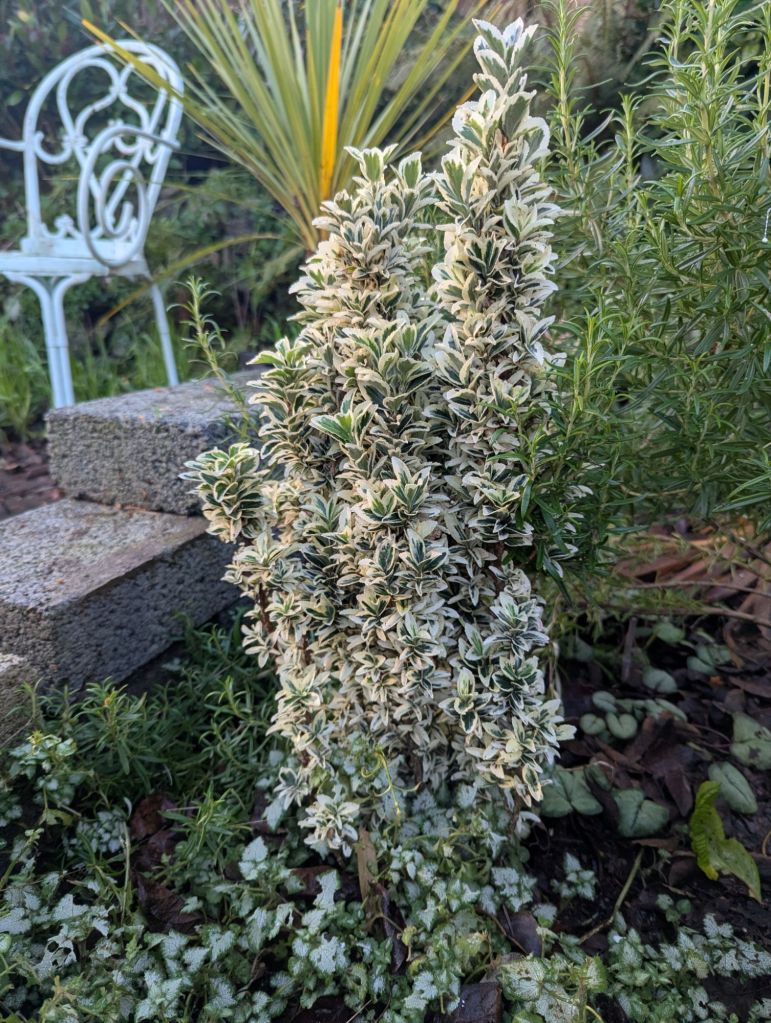
2. Euonymus

Variegated Euonymus japonicus. At this time of the year it shines brightly. The garden is back to bare bones so anything evergreen that also has a bit of structure is very welcome.

3. Pittosporum

Similar to the euonymus above, the Pittosporum does its job well. I have two of these, planted last year and I’m pleased to see them doing well. I’d imagine they’ll look even better in another year or two, but given my small space Ill be sure to keep them trimmed tidily.

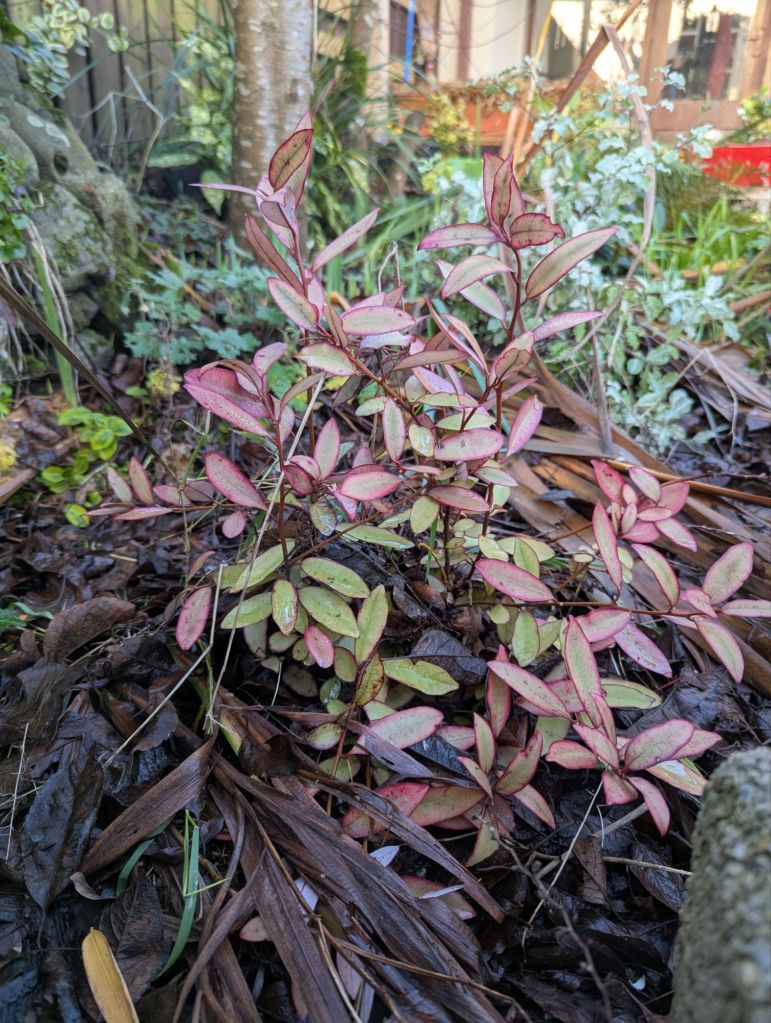
4. Mystery

I did know the name of this. I’d imagine I made a note of it when I got it last year or perhaps the year before. In any case, despite not knowing it’s name, I like it very much. I have a feeling that I got it after seeing someone here on SOS highlighting it.

Update:

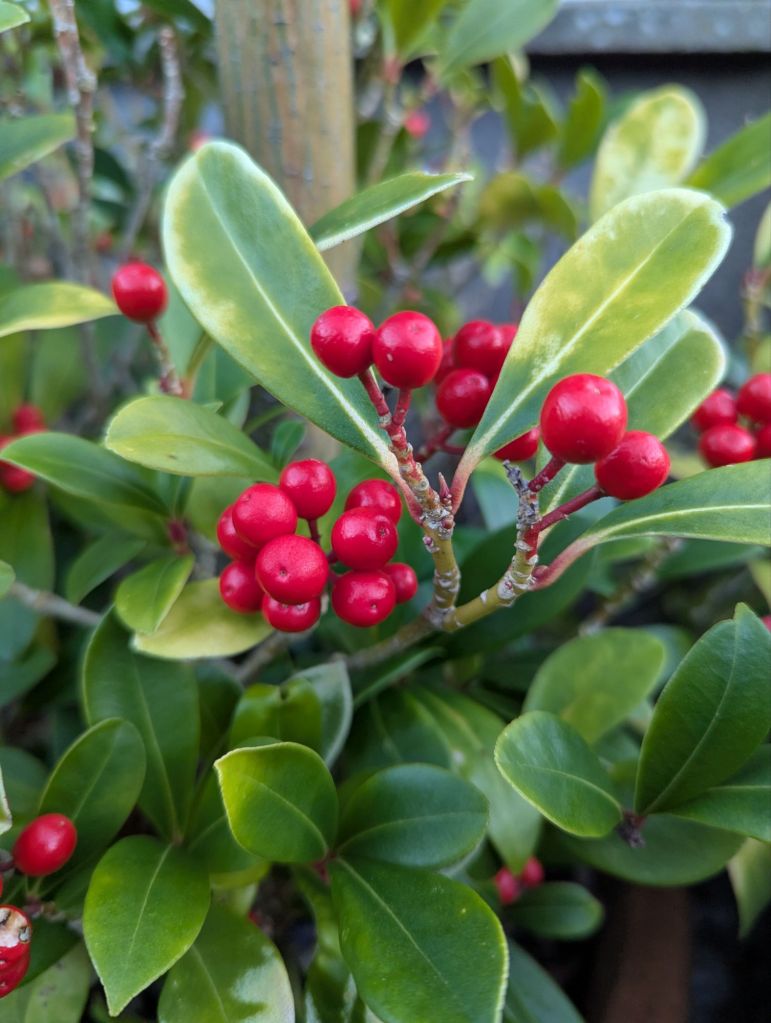
5. Skimmia

The skimmia is doing very well considering it’s in a pot, albeit a large one. I did remember to feed it twice during the year and I put a saucer under it so that during the summer it retained some water.

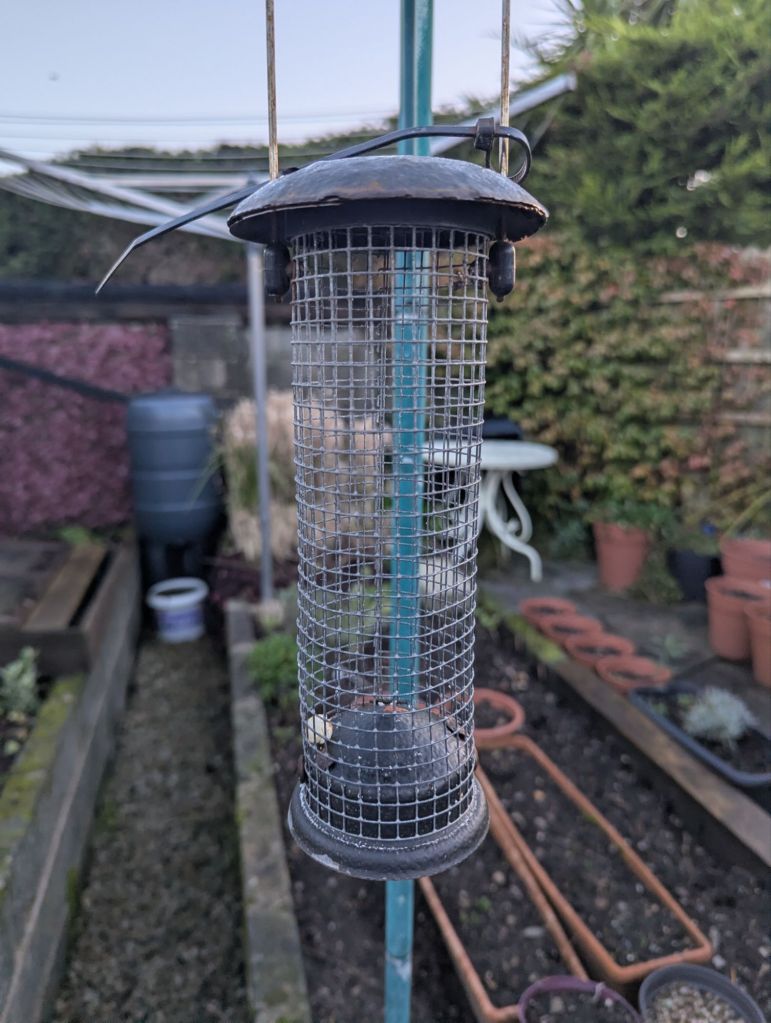
6. Birdfeeder

We love to attract birds to the garden and what better way to do that than to provide extra food during the cold weather. I’ve also been feeding myself a bit extra recently, just to see me through until spring. Soups and casseroles are my favourites, while peanuts, fat-balls and mixed seeds attract a good variety of birds.


Thanks to Jim at Garden Ruminations and Happy Christmas to all.

‘Tis The Solstice To Be Jolly

Dr. Karen Ward

I don’t mind losing things. Secateurs disappear. The blue jumper with the hole in one elbow has vanished. But losing something I’ve written tightens a knot in my stomach in a way nothing else does.

So I was delighted to find where I had kept “The Dark”, adapted from an RTE documentary  in 2023, on one of my old blogs, and I want to use it again as we northerners celebrate Winter Solstice.

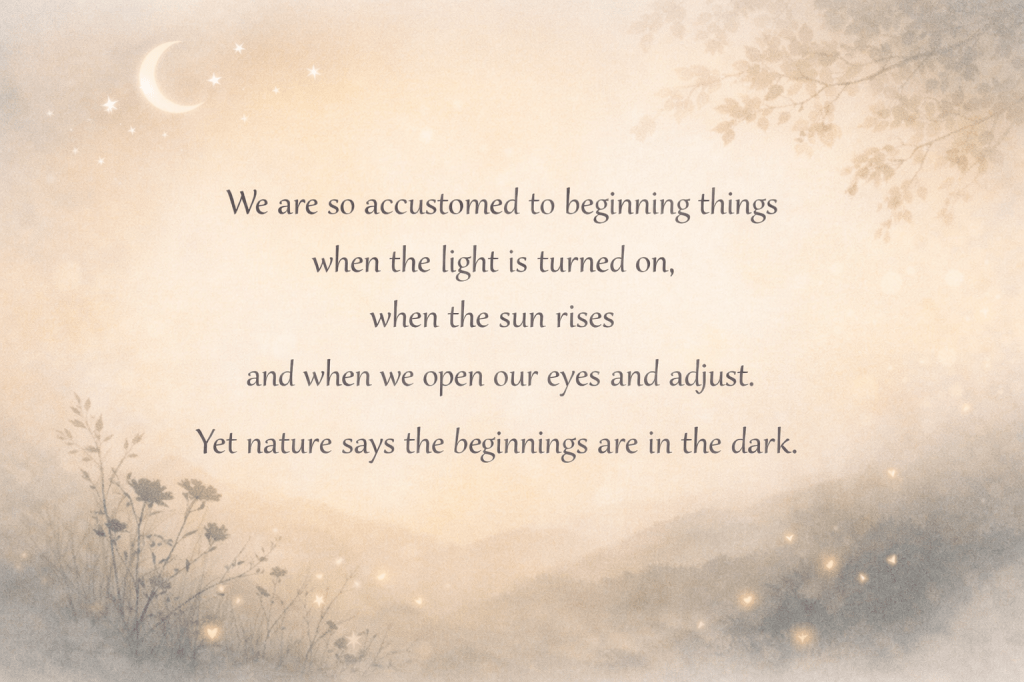
“The experience of darkness is such a different condition to light and is often sadly stigmatised. We are so accustomed to beginning things when the light is turned on, when the sun rises and when we open our eyes and adjust. Yet nature says the beginnings are in the dark. Life first is dreamed and vibrates in the absence of light. The seeds sown in autumn germinate underground through winter before appearing as shoots in spring. Each one of us reading this lived our first nine months or thereabouts in our mother’s dark womb.” – Dr. Karen Ward

Winter Solstice 2025.

I await brighter days of warm sunshine and I’ll sit awhile to soak it all in. Today is for slowing down and being content to wait for these brighter days ahead.

Finally, based upon this theme I’ve a more reflective version over on my Reflections Blog. Perhaps you might like to reflect further? Here it is.

Páraig

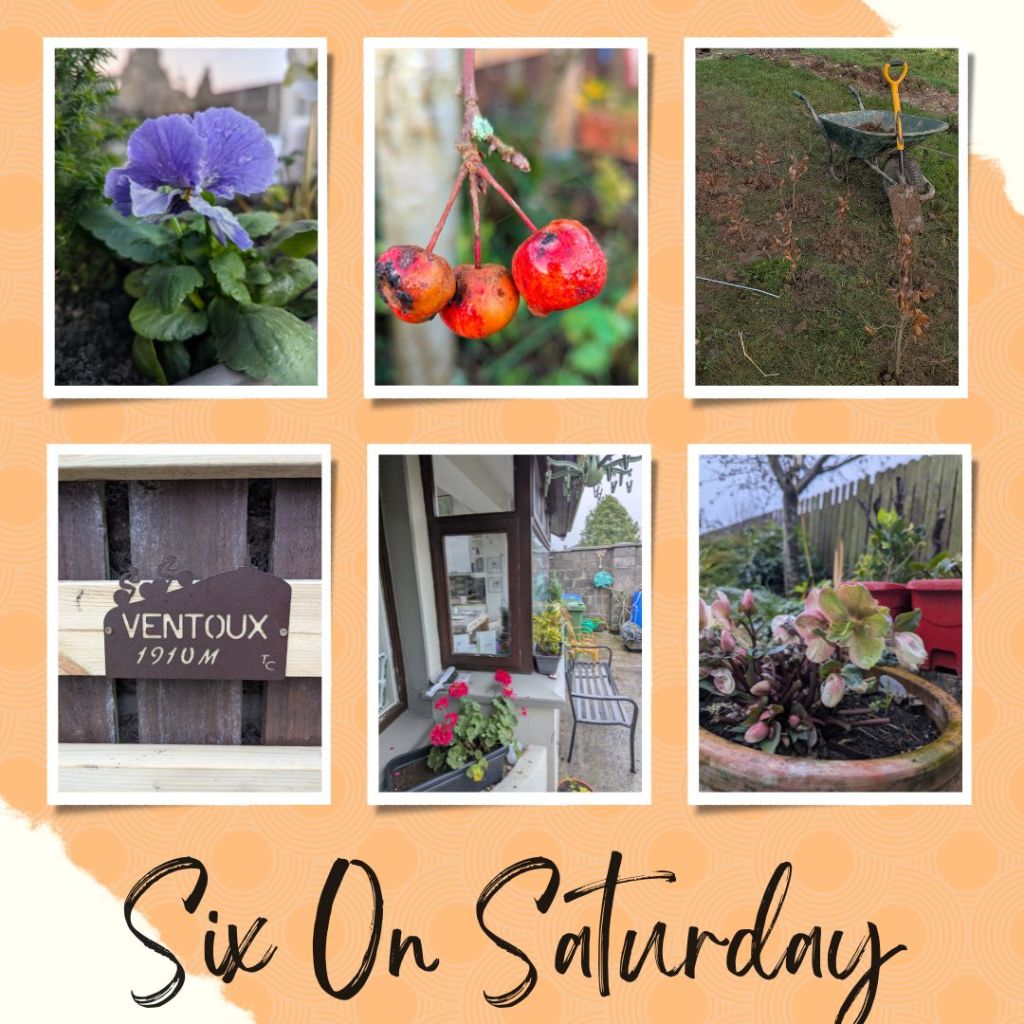
Six On Saturday: Wexford To Ventoux

Another week of downpours and deluges. However, this time it was only every second day, with hard frosts and bright sunshine in between. The downpour days were double downpours and they did test my spirits, they did. In the middle of these testing deluges, news from Bondi Beach brought a sobering perspective. Seems a bit pointless to be getting upset over rain.

Closer to home, I had two days of hard labour in Wexford: physical work that left its mark but also delivered a quiet sense of purpose. In between, there were lots of Christmas preparations—lists, small rituals and cautious hopes. And so, with boots still damp, perspective restored, and one eye on the calendar, here we go again — another Six On Saturday.


1. Beech Hedging

Fagus sylvatica

Spoiler alert: not my garden.

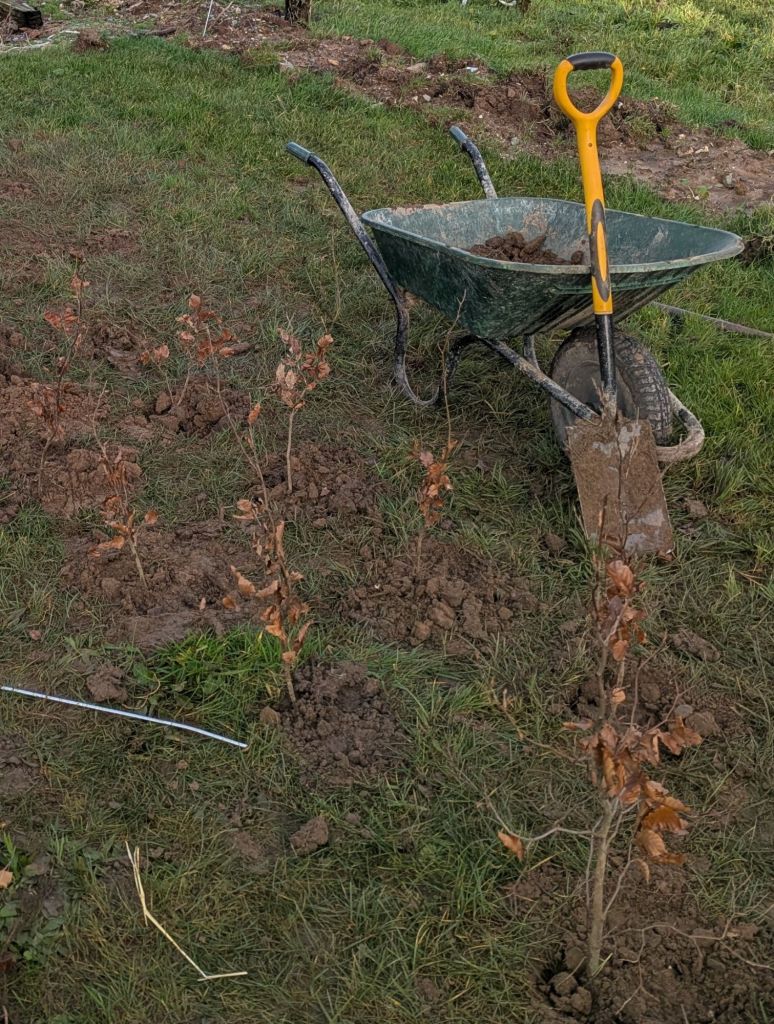
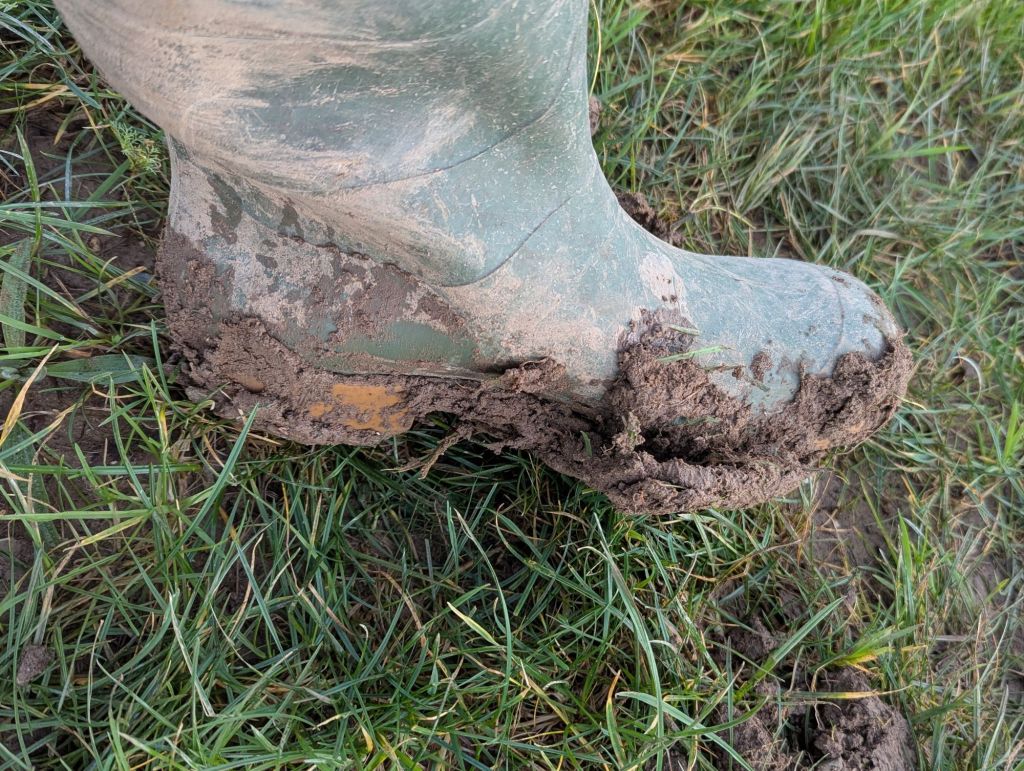
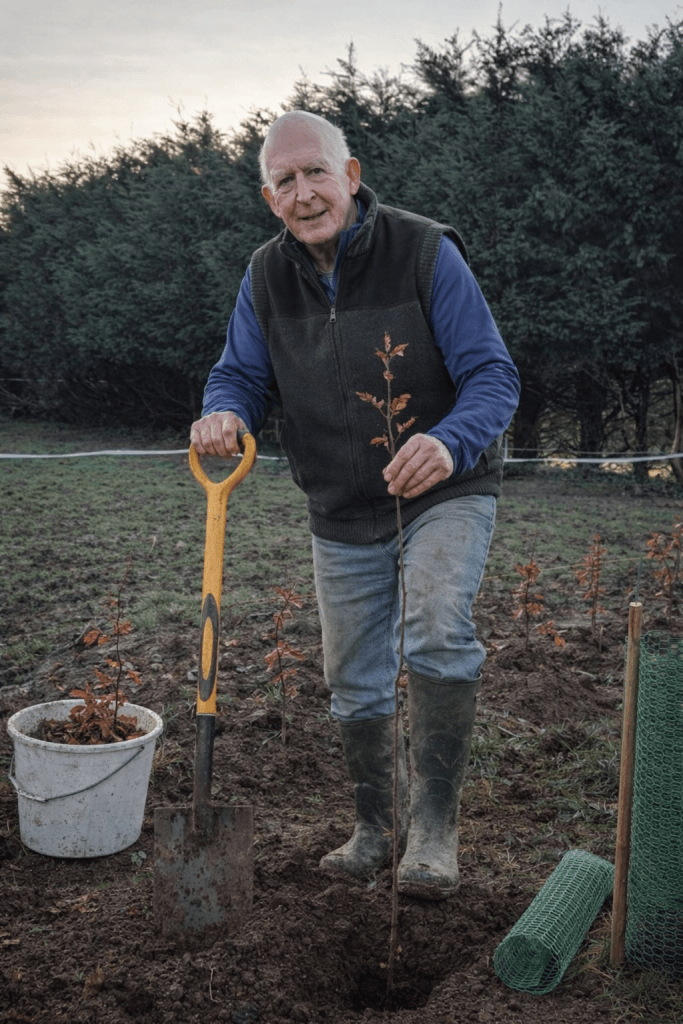
We spent two days planting two hundred beech whips at Méabh and Jimmy’s place in Wexford. It was a very satisfying job. Afterwards, less so. I discovered aches in places that had clearly been idle for some time.

Although this is very definitely not my garden, I may adopt it. Our daughter and other half seem willing to give me (almost) free rein to develop their site from scratch. It will never be my garden but I’d like to leave my mark. Nothing dramatic. Just enough to say: I was here.

“Whips” is the term used for small bare-root beech plants. I didn’t know that. Read more.

Soil conditions: Saturated

2. Pansy

Pansy

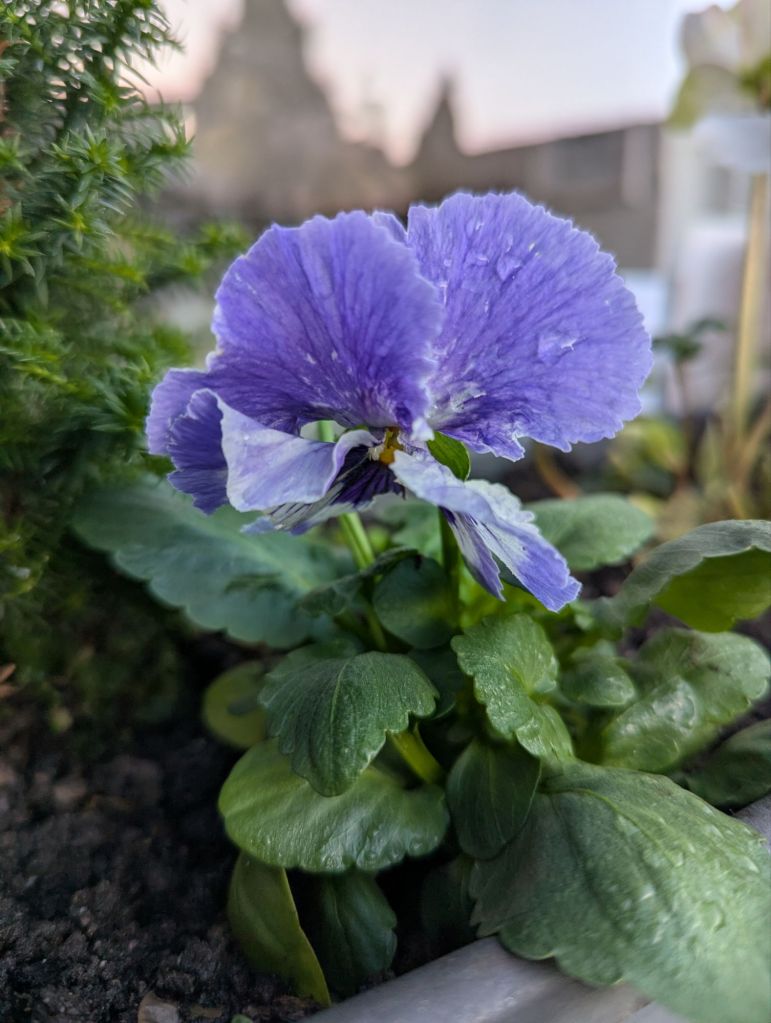
There are six of these—two in the window boxes and four among the pots beneath the pergola. A hard frost paid a visit last Monday night, but this little plant stands tall regardless, silently asking the weather, Is that all you’ve got? Small plant. Big attitude. Winter can bring its worst; the pansy has already read the forecast and remains unimpressed.

3. Geranium & Operator Error

Geranium Pelargonium

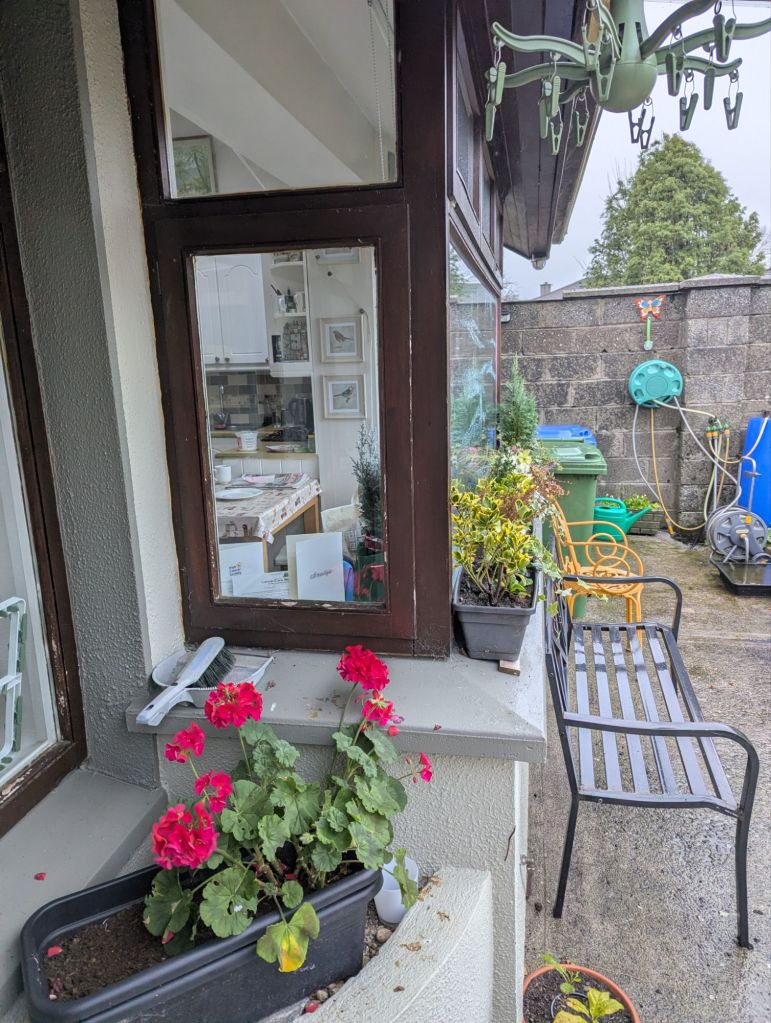
It’s really a pelargonium, though it’s commonly known as a geranium. John prefers it by its proper name, so I’m happy to oblige. A small correction, quietly noted.

It also lends some support to the rumour that I’m far from perfect. This was confirmed to me last Sunday when I emptied the washing machine and hung everything neatly on the clothes horse — all before breakfast. I allowed myself a moment of mild satisfaction.

It didn’t last.

None of it had been washed.

A little Operator Error, nothing serious. Still, it may be how habits begin.

4. Another Hellebore

Hellebore

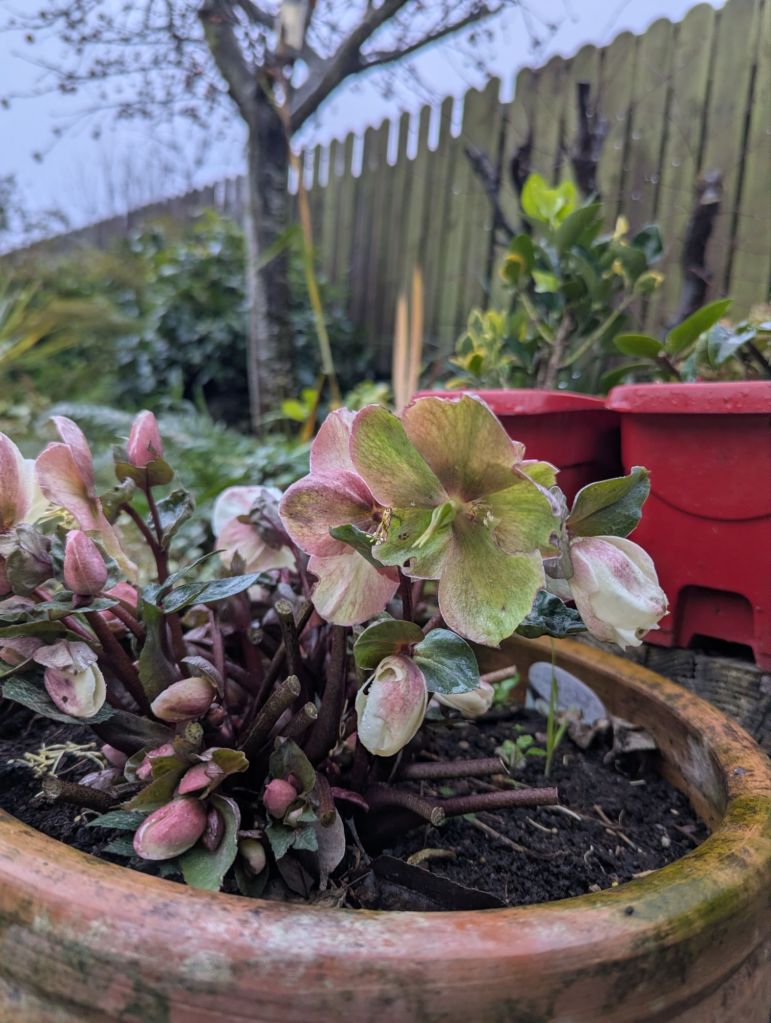
I included a hellebore last week. Lo and behold, here’s another. This one is a textbook hellebore: head bowed, flowers facing the ground, and a firm insistence that you kneel to appreciate it properly. Photographs must be taken from below, camera pointing skywards.

Consider it a combined gardening and wellness exercise. As with all such pursuits, overdoing it is discouraged.

Reminder re: overdoing it… planting of the beech whips is a sad reminder that I really should listen to my own good advice!

5. Malus

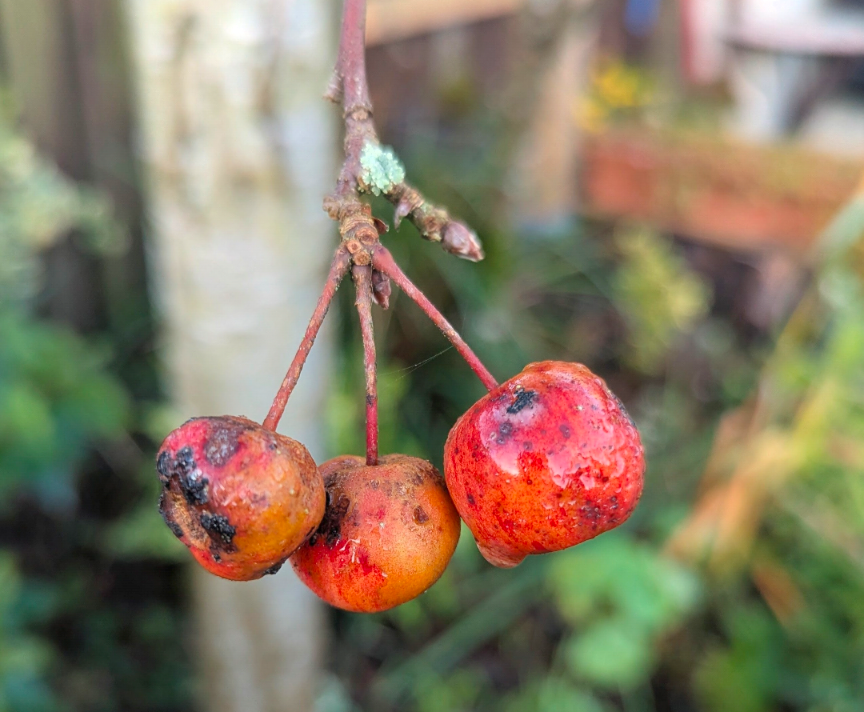
Malus: crab apple

That’s the fruit of a crab apple tree (Malus). Small  apples hanging on long, thin stalks, often blotched or scabby. They cling on long after the leaves have gone.

There are hundreds, if not thousands of tiny red apples. Every now and then I notice a blackbird teasing one off for breakfast. She does not feast. It’s a pantry, not a party.

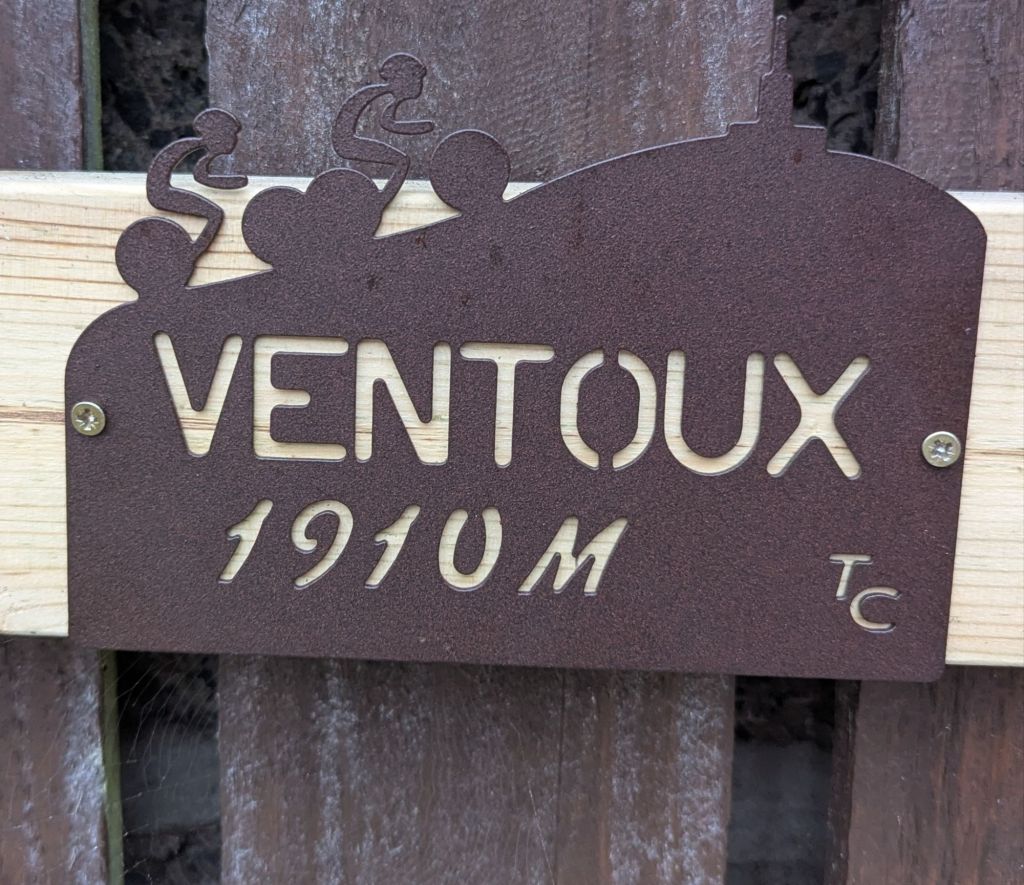
6. Mont Ventoux

In my garden there’s a small piece of metal that carries a big memory. It speaks of effort, companionship, and the curious satisfaction of having gone up something very big—only to come safely down again. Like all good garden features, it rewards close inspection, reveals a gentle truth, and asks a question just for fun.

Mont Ventoux en Provence

This plaque is to remind me that Marion and I, along with eight other members of Dungarvan Cycling Club, cycled to the summit of Mont Ventoux in September 2023, climbing the 1,910 metres in 2h22m. Extinct French volcanoes are trez magnifique.

The descent back to Bedoin took about 45 minutes.

Close inspection of the plaque reveals a subtle, symbolic detail: Marion is slightly ahead as is only right, while I am in minding mode. Some things, it seems, are captured perfectly in metal.

Mastermind or University Challenge question: what do the letters TC on the plaque mean?


I wish everyone a Happy Christmas. Meanwhile Jim, chewing the cud at Garden Ruminations, reminds me that beggars can’t be choosers and to be grateful for even small flower colour at this time of the year.

Summary:

Some weeks ask very little of us. Others ask for effort, patience, and a bit of kindness — to plants, to people, and occasionally to ourselves. This one asked for all three.

Páraig

Whips

We planted two hundred beech whips in Barntown last week.

Why are they called whips?

They’re called whips because they look like… well, whips.

In nursery-speak, a whip is a young tree—usually one or two years old—with a single, slender stem and little or no branching. Long, flexible, and straight, it has more in common with a riding crop than a “tree” as we imagine it.

The name stuck because:

  • they’re thin and pliable
  • they bend without breaking
  • they’re ideal for hedging and training

Given time, soil, and patience, today’s whip becomes tomorrow’s hedge. A good lesson, really—start simple, grow strong.

Six-on-Saturday: Surprise Surprise

I’ve missed my Six-on-Saturday and I’ve missed reading garden updates from others. So, just as if I’d been here every week, I’ll continue as before.

Who remembers Grow-Write-Repeat? Who remembers The Three Hairs? I’m Páraig, still here on the south-east coast of Ireland and I’ll be looking forward to  reconnecting with lots of old SOSers. If you remember me, have a quiet chuckle as you read.

Today, I had a sudden urge to resurrect the old blog, but it’s full! I can write forever and ever but not a single extra photograph will upload until I pay some money, so I’m starting anew. This Six-on-Saturday reappearance is long overdue.


It’s been a wet one. In fact, it’s been a very very wet one. Storm Bram blew through on Tuesday, pushing rain northwards at a fierce rate of knots, in order to allow wetter rain to follow immediately. On Wednesday, in between being wet and being very wet, there was a short glimpse of blue sky.

In any case, all of that is just a meandering preamble to my surprise reappearance. I’ve missed my Six-on-Saturday and I’ve missed reading garden updates from others. So, just as if I’d been here every week, I’ll continue as before. Perhaps you will recognize me again and be tempted to reconnect?

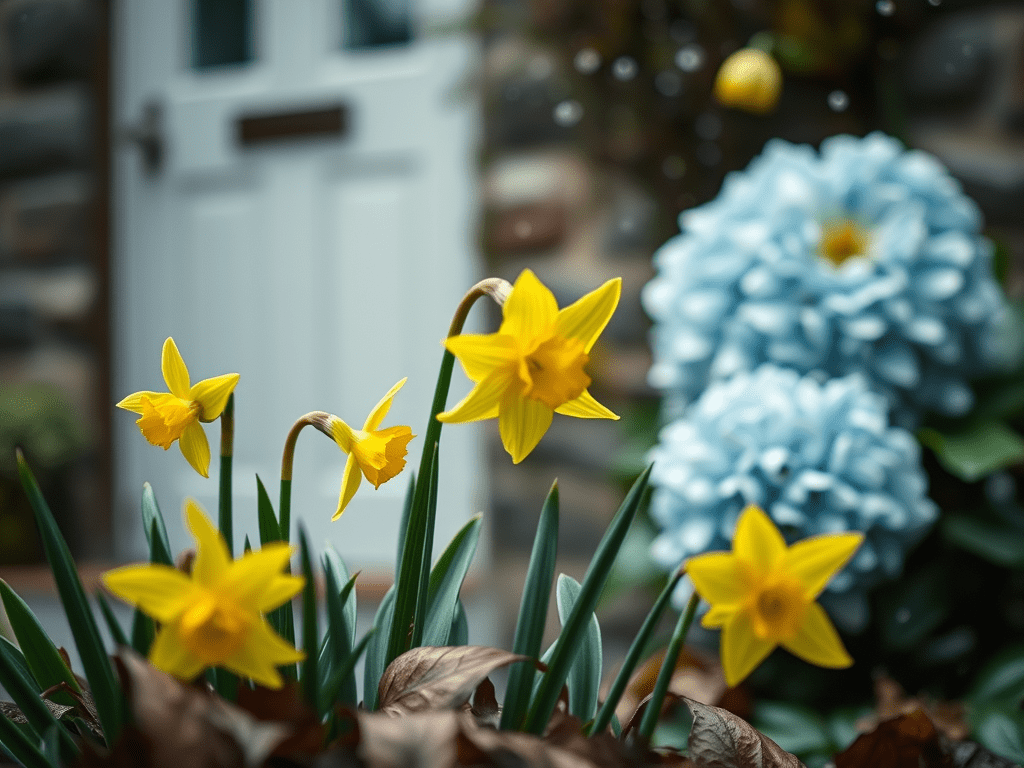
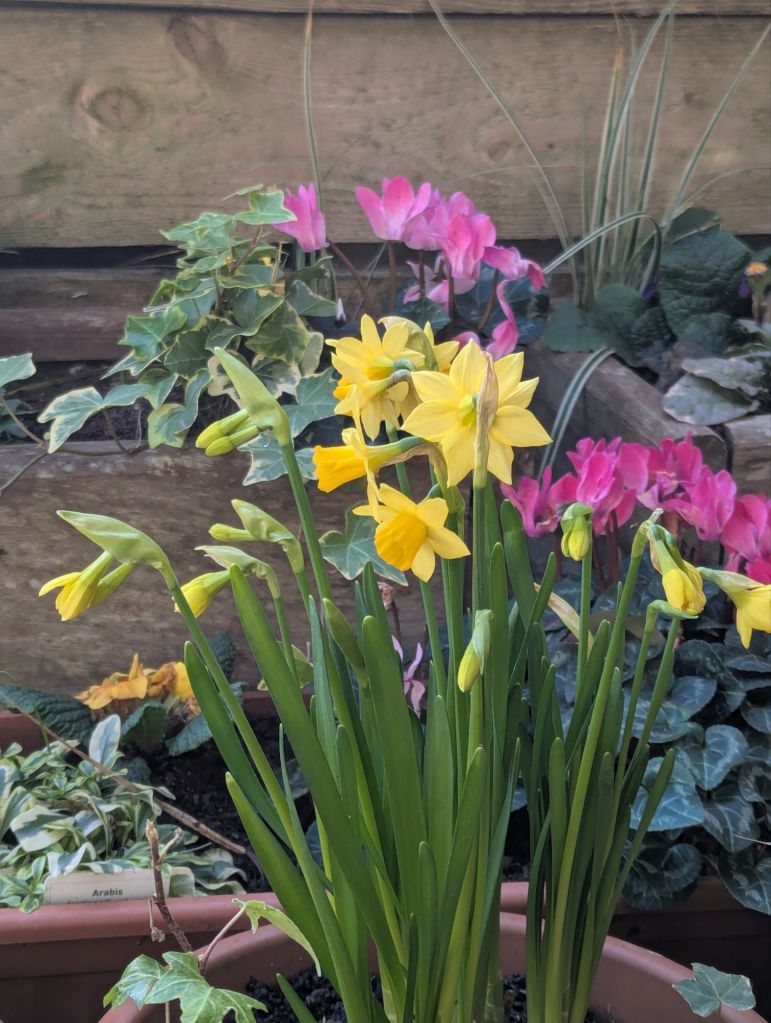
1. Early Daffodils

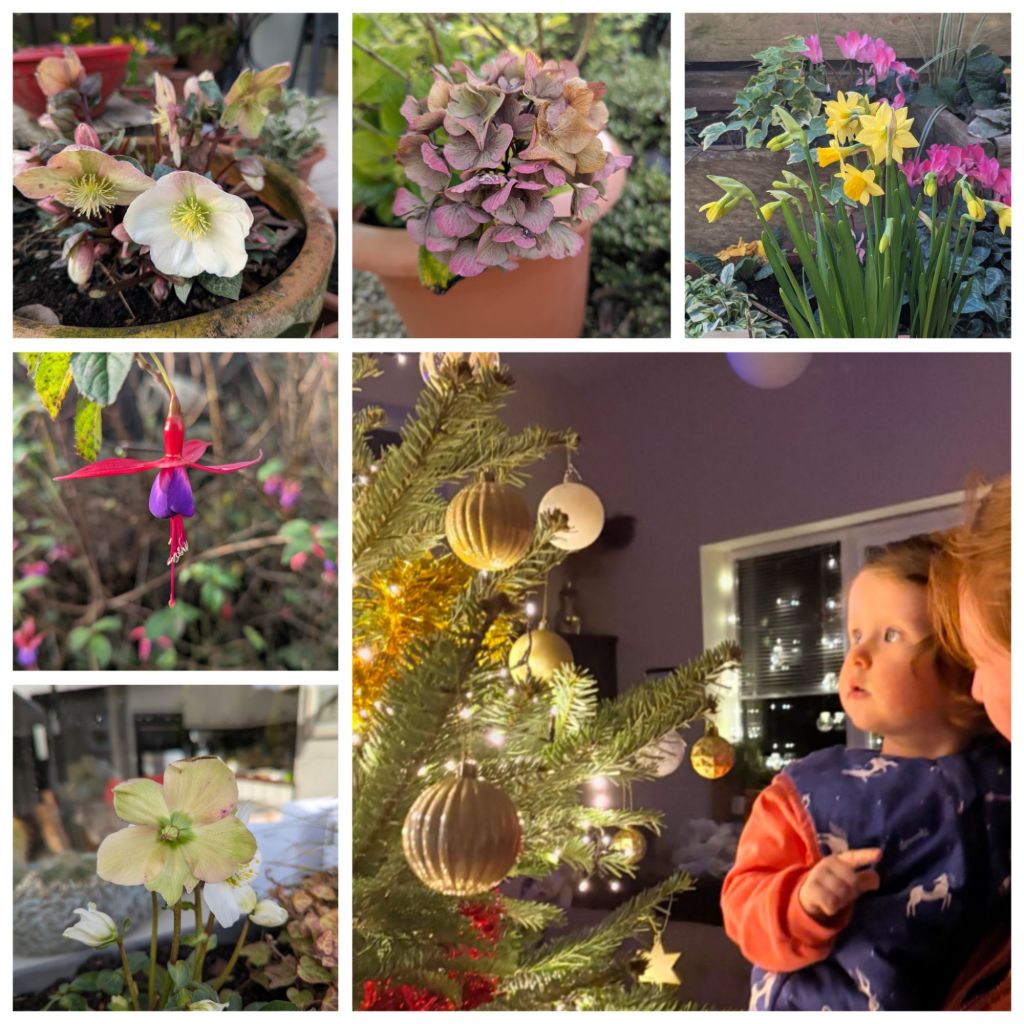
These were bought recently and are well ahead of themselves. I’ve put them just outside the back door. As I enjoy my morning coffee, padded with heavy jumper and jacket, these pretty things bring a smile to my face this very wet mid-December week.

Gently coaxed into flower, they bring a welcome hint of brightness — like fairy lights in the dark of winter — reminding us that spring is already quietly preparing itself.

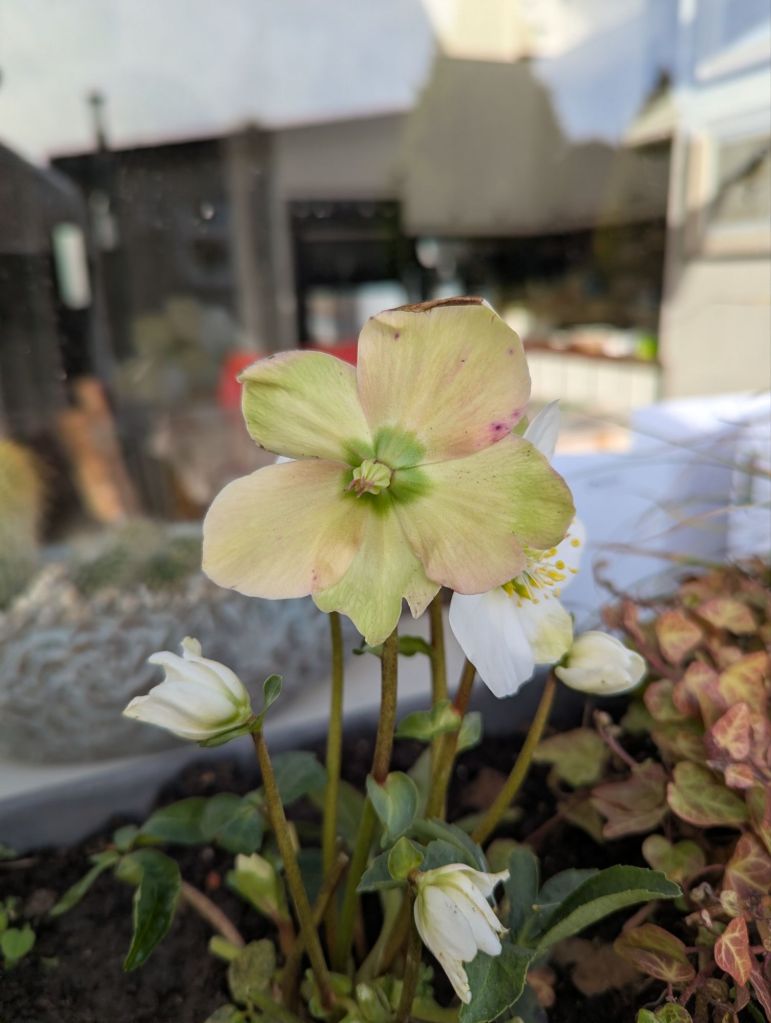
2. Hellebore

For many years I had put cyclamen in the kitchen window boxes, but I was never happy with their staying power. This year, I’ve added two of these beauties.

Calm, dignified, and flowering quietly while everything else argues about the weather, the hellebore is basically the sensible adult of the garden.

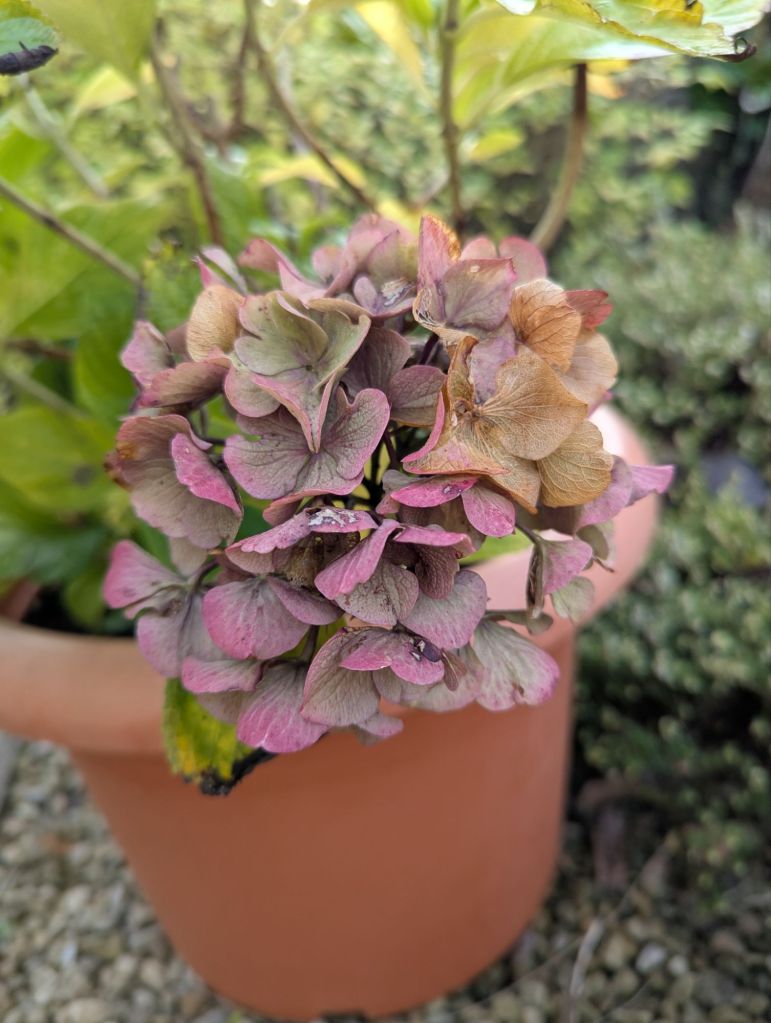
3. Hydrangea

Further down the garden, this is the only flower produced on this hydrangea this year. Who could advise about what to do for next year? Admittedly, it’s in a pot so perhaps it would be better on the ground?

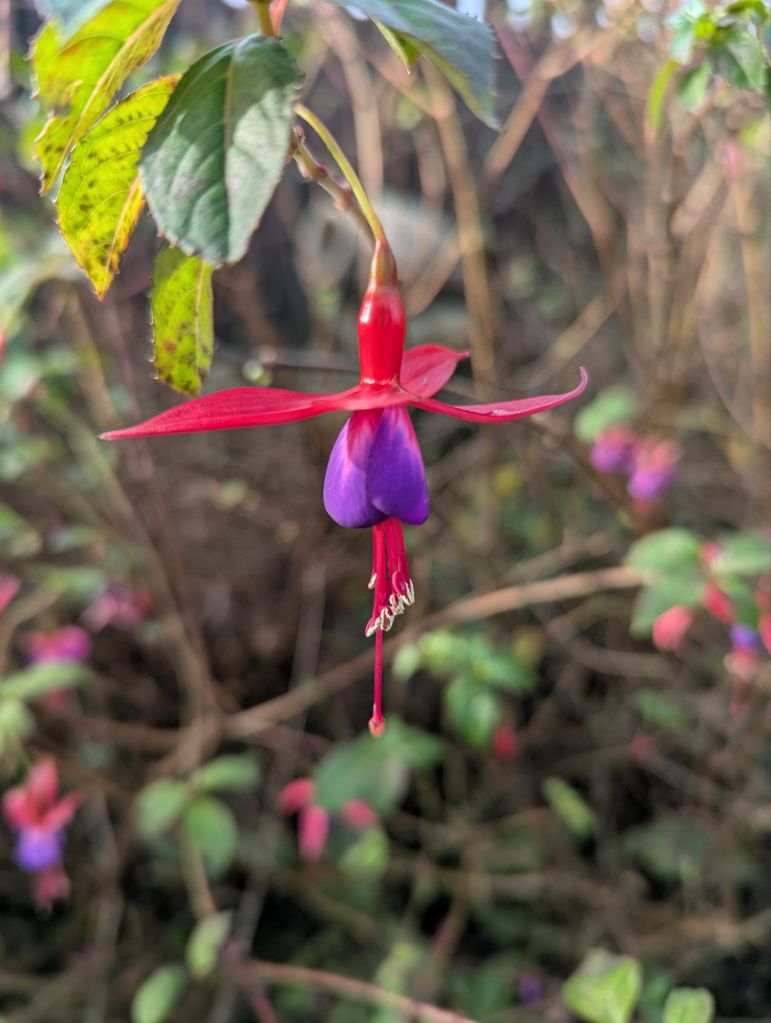
4. Fuchsia

I’ve three different fuchsias in my small garden. Even at this time of the year, they look well.

5. New Tiled Corner

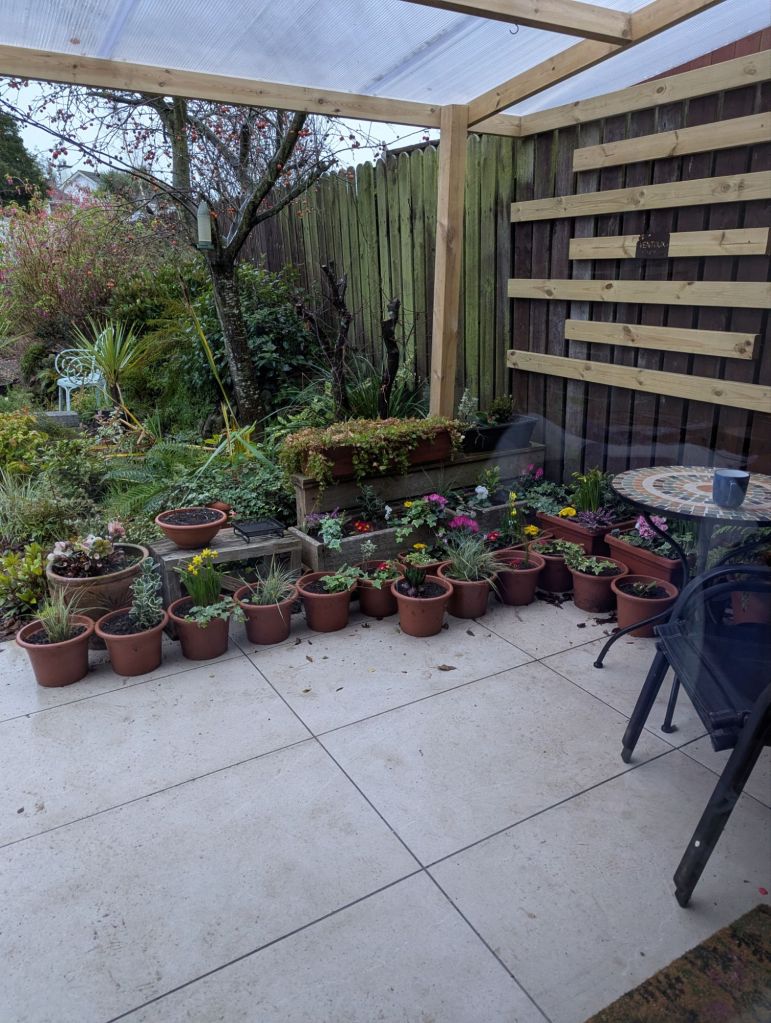
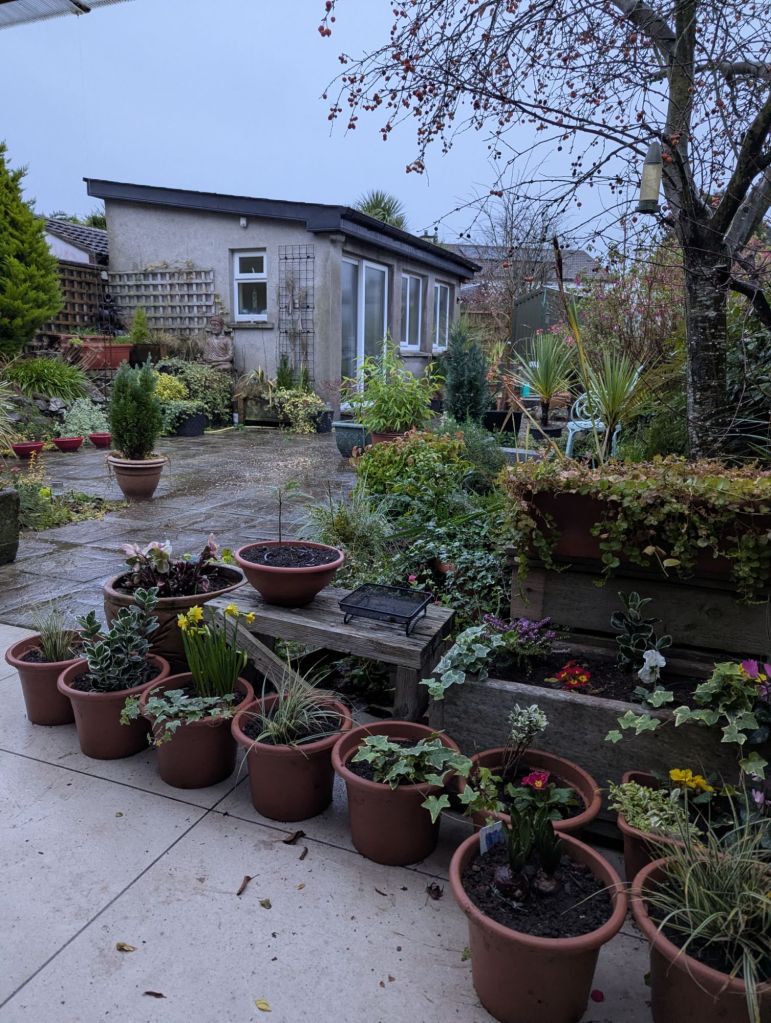
Recently installed and already earning its keep by providing shelter from the rain. Perfect for standing under, staring at the garden, and wondering why you didn’t do this years ago.

Our big project for 2025 was this area just outside the conservatory door. We had it tiled and we put up a covered pergola. Now, as it rains and rains and rains more, I like to sit and sip my morning coffee here. Many of the potted winter flowering plants here do benefit from this warm dry corner.

Blue sky, you’ll notice. What’s rare is wonderful.

6. Saving Best Till Last

Finally I’m more than happy to bend Jim’s Rule 7. This is not my garden. It’s not even my Christmas tree, but being a first-time grandad does confer some latitude. Rule bending really is such good fun.

My last Six-on-Saturday was back in February 2024. Shortly afterwards our granddaughter Bonnie arrived. She continues to bring us joy and happiness in abundance.

And that’s your surprise Six-on-Saturday: plants blooming out of season, rain everywhere, rules cheerfully ignored, and a blog that has popped back up like a perennial you thought you’d lost.


Thanks to  Jim at Garden Ruminations who keeps this show on the road.

Happy Saturday to one and all.

Páraig.

Six-on-Saturday: February 2024 Week 4

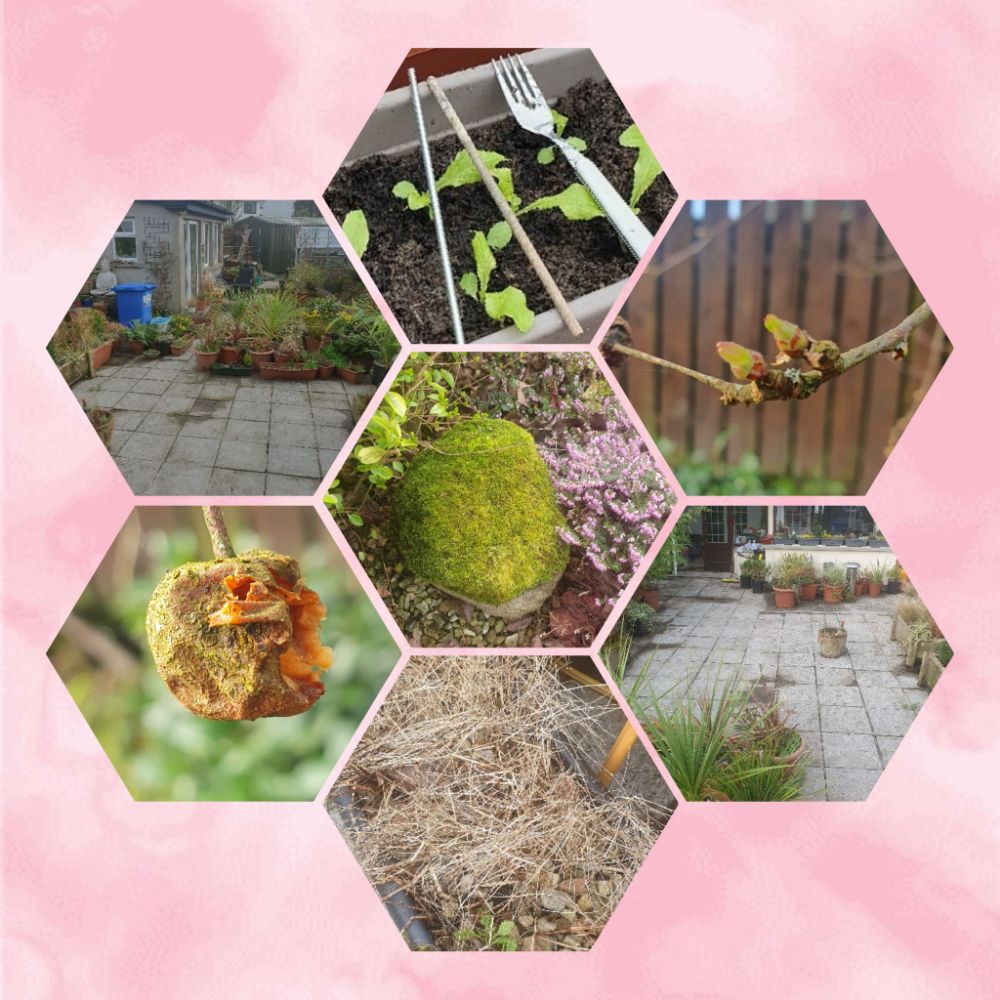
Featuring: alyssum, apple shoots, a lone crabapple, lettuce, moss, and powerwashing.

I am retired but my weeks are busy. Increasingly during February I’m busy in the garden for short daily bursts. I’m busy too with meetings, book readings and creative opportunities. This week has been exceptionally busy. There were some added chores including car repair, book emails, handwritten letters, and further failed efforts to reorganise my website.

Now it’s time to focus on SIX. This week’s offering excites me. I do hope you enjoy it. Ar aghaidh linn… Off we go…

Powerwashed Patio

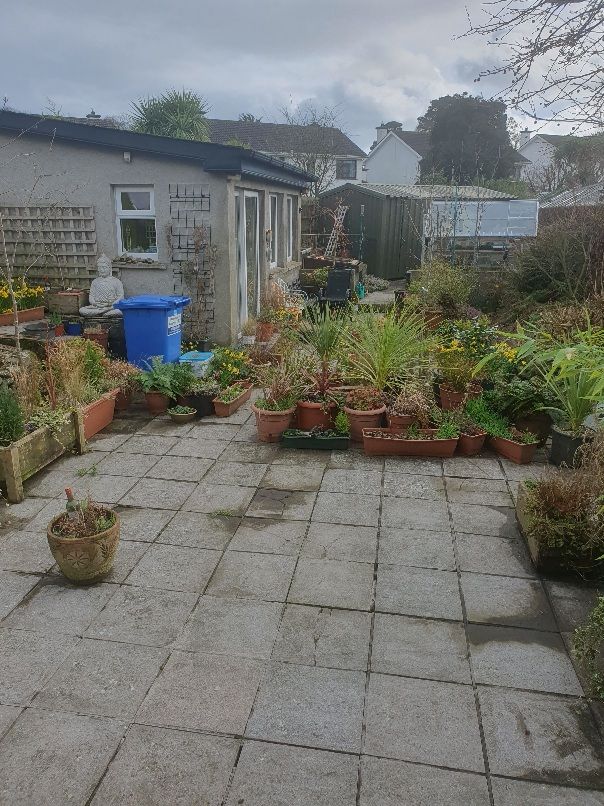
Changed utterly. A terrible beautiful patio is reborn. The powerwashing is finished. Moving all pots and planters amounted to more lifting than I’ve had in the gym since Christmas and still they lie higgeldy piggeldy waiting for my energy reserves to be replenished. The blue bin and the Budda are not normally side by side and the path to the shed is gridlocked. Next week I’ll show the end result. My plan is for a radical shake up.

Moss

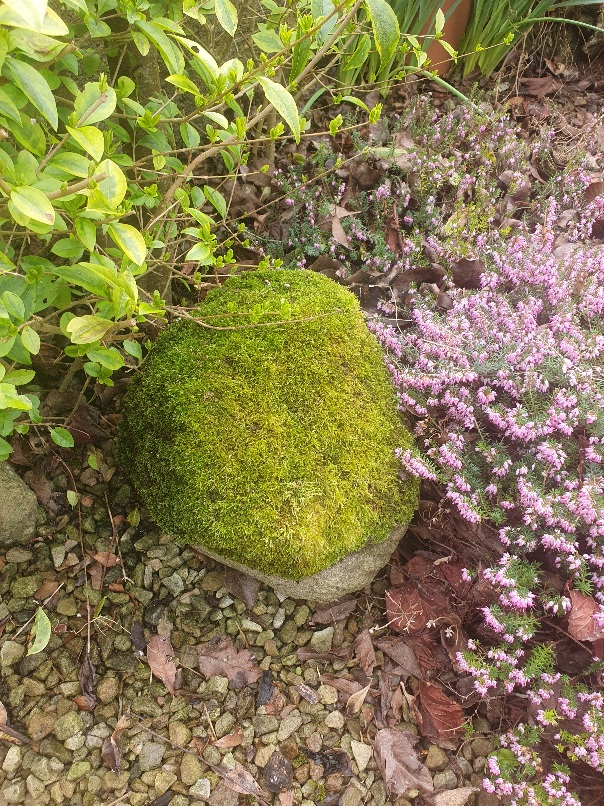
A rolling stone gathers no moss, and inversely the moss on this stone is there for a reason. Nature ingeniously fills the void.

Crabapple

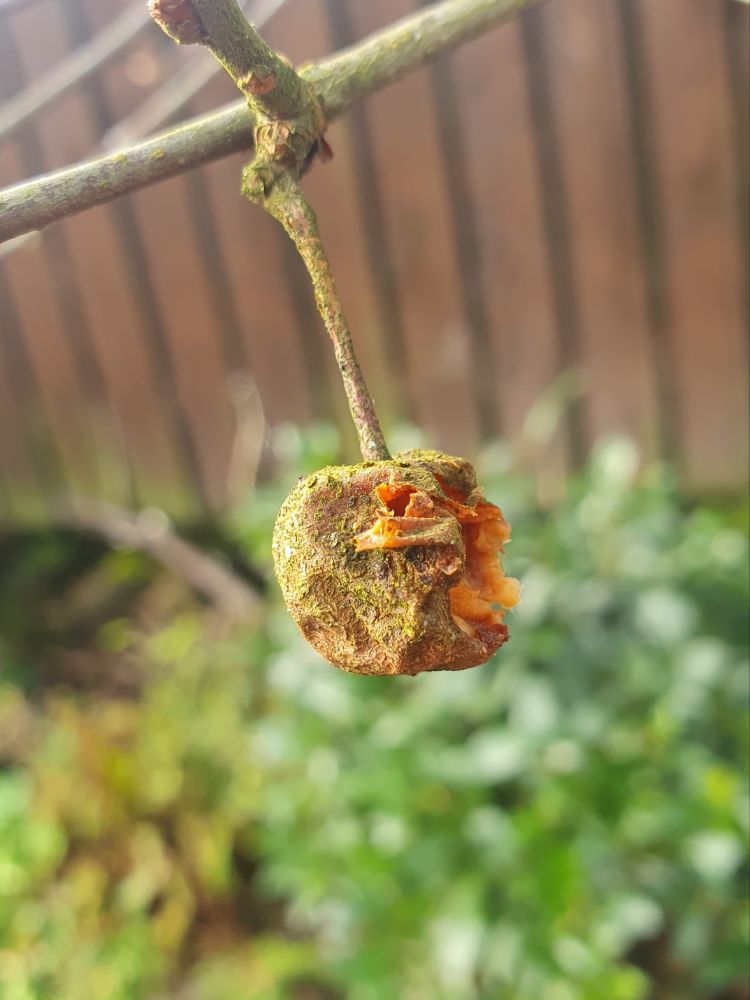
Up close with a decaying Crabapple. There were several flies in and around this but I seem to have scared them off.

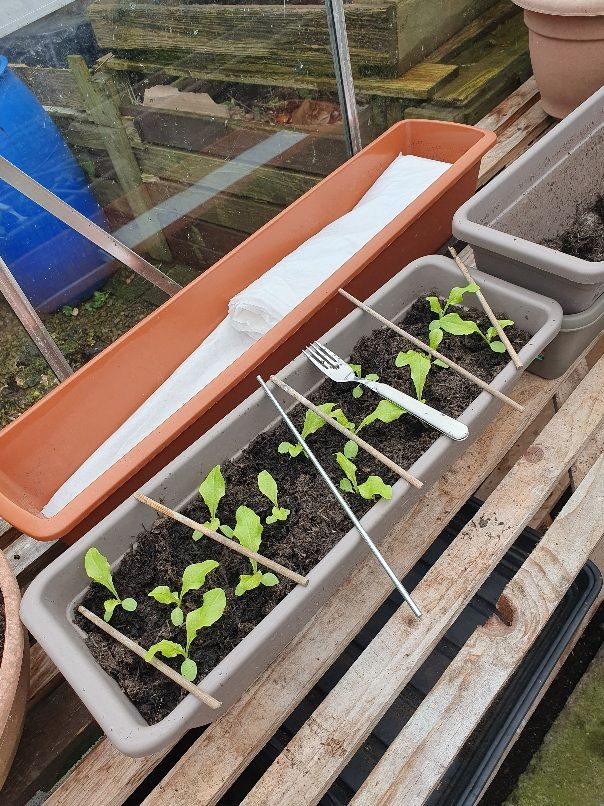
Lettuces

My best guess it I’ll be having homegrown lettuce for lunch in about three weeks. In case you’re wondering, I’ve put a few obstacles to deter the curious blackbird. She loves to scatter soil looking for delicious food beneath.

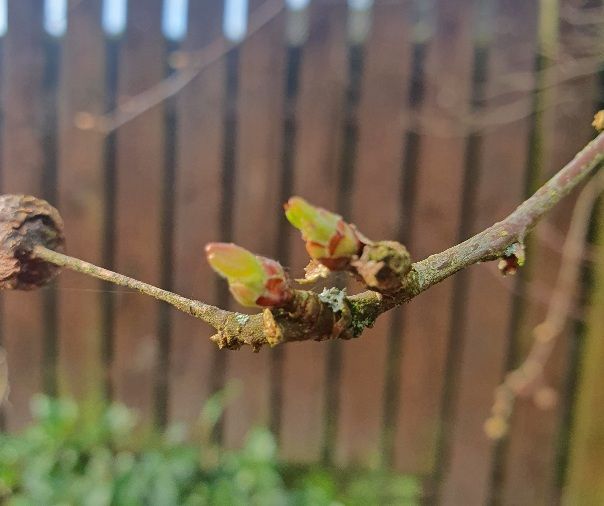
Apple Buds

My intention was to get a decent shot of the emerging apple shoots. I did but both shoots are slightly blurred. So, as a means of turning my disappointment to a positive, I changed focus to the lichen growing on the bough. Delighted with myself!

Technically, the shoots are not blurred, merely the shot. Operator error once more. I’m considering self-flagellation.

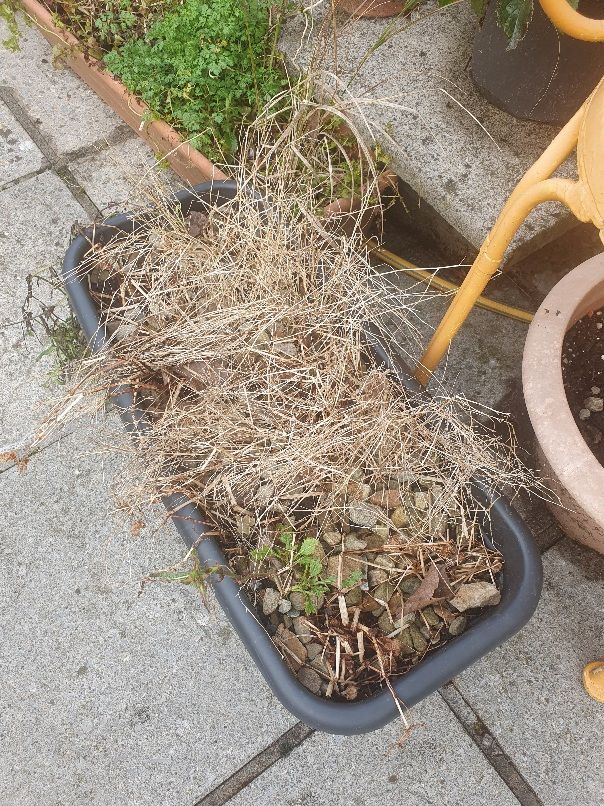
Nesting Material

Here lie the mortal remains of last summer’s white Alyssum. Although I’m tempted to tidy it away I’ll leave it for the birds. Nest construction has commenced so I’ll keep a watchful eye for activity. Many of the wild grasses have been trimmed back and the clippings are strewn about in as higgeldy piggeldy a fashion as the pots.

Summary

Páraig

Primrose Lore

(republished from another of my defunct blogs, written in 2019).

Garden centres are gearing up for the mad rush and gardeners are gearing up for visits to garden centre. Its a win-win situation.
Before the mad rush, I visited my local Country Life yesterday and came away with nineteen plants for a tenner. A single Aubretia Kitte Blue, a container of twelve cauliflowers and six beautiful promroses. The variety is unknown. While primroses are generally known to be yellow, it’s not always the case: there are so many varieties and colours available now.


I chose the stunningly vibrant lilac/pink ones standing erect on tall stems. The petals are so precisely formed, and right in the centre is a contrasting yellow. Within an hour, I had planted them into larger pots and they look great among the other spring plants.


Later, during the course of several gun battles on television, I elected to open up my Irish Wild Plants book. Primroses are given a chapter to themselves. Here are some items of information relating to them:

  • Long ago in Ireland, people used to hang a string of primroses over the door at the start of May. It was said that the primroses would protect the house as the fairies were not able to pass.
  • In many places primroses given as a gift should be a very full bunch or else misfortune would ensue, and a single primrose brought into a house was an omen of death.
  • In herbal medicine primroses were considered useful to treat jaundice, insomnia, tuberculosis, toothache and anxiety.
  • Coughs in horses were cured using crushed primrose roots strained in breast milk and put into the horses’ nose frequently!
  • In Irish it’s name is sabhaircín (pronounced sour-keen)
  • Finally, the Druids often carried primroses during their Celtic rituals as a protection from evil. Fragrant primrose oils were used to purify and anoint during these ancient rites.

P.
Is this your new site? Log in to activate admin features and dismiss this message
Log In